The brokenness of human life requires rest. I am deeply aware of my brokenness, and I love to come alongside others and give them grace in their brokenness, but I am not very good at embracing my own brokenness. I’m also not very good at rest. Maybe some of you can relate—I tend to treat rest as if it is earned, instead of seeing it as a gift that enables a healthy pattern of life. I know it is not healthy to think of rest as earned, and I don’t think it is Biblical either. Recently, as I was reading Tish Harrison Warren’s book Liturgy of the Ordinary, about seeing our ordinary lives as opportunities to worship and acknowledge God, I began to see that, while I don’t have grand ambition career wise and I don’t have an illusion that I am particularly important, I still don’t embrace my ordinariness very well.
I have matured over the years as I have become more and more acquainted with my weaknesses, and have learned to walk constantly in light of God’s grace in my life. He is the one who makes things grow and produces fruit! Yet I haven’t managed to rip out the weed of “disappointment in myself” in order to let the precious plant of “my sufficiency is in Christ” to fully flourish. I function by the metric that if I don’t feel like I have been efficient or effective enough with my time, then I haven’t really earned my spot in the world, so to speak. In other words, I let thoughts swirl in my head like: do I really deserve my salary? Do I really merit the respect of others based on what I have accomplished? And that somehow translates into thoughts like, “have I accomplished enough to earn the right to rest?” I seem to think the answer is no, because I keep turning to the next task…
If I drill down on my wrong mentality, I see that it produces hamster-wheel-type behaviors, because I don’t even have a way of measuring “enough.” So in reality, I will never have done enough; it is a constantly moving and elusive line. It includes my work product (in a job that is very intellectual and nuanced, with research that I never feel fully confident is quite “done,” so I just stop when I run out of time and hope I didn’t miss anything big). “Enough” in my head also includes a certain level of brain functioning and an ongoing pursuit of and accumulation of knowledge, so if I am working, but I don’t feel like I am focusing well enough on a particular day, then I almost feel like that time didn’t count as truly working, so I better make up for it with more time. “Enough” also includes a tidy-ish house, good food for my family, laundry folded, time spent with and teaching of my children, and taking active steps to communicate to family, friends or church members that they are thought of and cared for in some way (I definitely feel like I always fail on the “enough” on that front). So yea, I guess when my husband tells me that I should stop comparing myself to my “phantom ____” (fill in the blank with whatever role, like mom, friend, pastor’s wife, constitutional lawyer, ministry leader, healthy and fit woman, etc), that means I need to let go of my “Enough.”
But how do I let go of my “Enough”? I need to release my constant fear of “messing up” or “not measuring up.” I know that the Lord is actively seeking to do this work in my life. The Holy Spirit both convicts me of my wrong way of thinking and at the same time comforts me with the knowledge that Jesus is in fact enough, so I don’t have to be. In addition, knowing I am weak, he graciously provides—in his incredible and personalized way—people who speak into my need for affirmation. For example, when I was struggling with self-doubt and a decided lack of “enough-ness” at my organization’s National Conference recently, a Board member stopped me in the hall and told me he thought I was doing a really good job. I thanked the Board member for his kindness. Then, I also took a moment to step into a side room to pray. I thanked God for seeing me and for providing for me in my weakness. I took a deep breath, asked him to help me fix my eyes on him, and stepped back into the hallway with a bit more peace.
I still struggle—I need to dig up the weeds of doubt and self-righteousness that threaten to choke me. I need to learn to rest as a way of embracing God’s grace and His sufficiency instead of waiting until I have earned it.
Psalm 65:5-8
“My soul will be satisfied as with fat and rich food,
And my mouth will praise you with joyful lips,
When I remember you upon my bed,
And meditate on you in the watches of the night;
For you have been my help,
And in the shadow of your wings I will sing for joy.
My soul clings to you;
Your right hand upholds me.”
In this Psalm, David speaks of satisfaction that is not based on his adequacy or on what others think of him, but is satisfaction in God himself—in remembering, thinking of, thanking, and clinging to Him alone!
I want to be satisfied in God alone, for He is good!
This is a quick article I wrote as I was preparing to preach on the book of Judges to help people learn how to begin the process of read the Old Testament. It is very, very simple, and doesn’t come close to the depth one can have in understanding how to mine the depths of God’s word. It is also mainly focused on historical narratives, not wisdom literature, not poetry, not apocalyptic literature, not prophesy.
Here are some Key Questions to ask to help us learn how to open up the Old Testament, specifically the historical narrative sections.
Who read the Old testament?
The Jewish Scriptures were read by the Jewish people all along the way. As the Old Testament scriptures were written, they were read by faithful Israelites to help them follow YHWH. The question lies before us, who read the completed Old Testament?
How and when was the OT completed?
Most Biblical scholars, whether they believe in God or not, believe that the Jewish Scriptures were edited and completed by scribes and prophets in the years during and after the exile to Babylon–while the people were returned to the Promised Land, but still under foreign occupation.
These scribes and prophets understood that the exile from the Promised Land was a foundational event in the history of Israel and the event that the history of Israel pointed to. Therefore, they wrote and edited the Old Testament with the theme of exile as a foundational understanding of life with God. This begins with the exile from Eden and continues through the book of Chronicles, the last book in the Jewish Scriptures.
They believed the Scriptures are pointing forward to these three events: the Exile, the Return, and the coming of the Promised One, who would fully undo the exile. The main Jewish belief was that the Promised One (The Anointed One, Messiah, Christ) would come and restore Israel to self-rule, establishing the Kingdom of God, and reign as King, much as strong Israeli rulers had done in the past (Moses, Joshua, David).
The hermeneutical lens of the Jewish Scriptures
Because of the editing of these scribes, these three events (Exile, Return, Messiah) provide a hermeneutical lens through which to read the Jewish Scriptures. Throughout the Scriptures there is the promise of blessing if the people follow God, but the peoples’ inability to consistently and fully follow the Law. If they do not follow the Law, the curses of the Law will fall upon them, leading them to Exile—the removal of the people from the Promised Land and the removal of the Presence of God from the Promised Land as well. This Exile happens in 586BC, attested by the prophets Jeremiah, Ezekiel and the books of Kings and Chronicles.
While in Exile, if they return in their hearts to follow God, He will Return them to the Land. In the midst of that Return, the promise of a New Heart and a New Covenant stands a beacon of light to the people. This Return to the Land and establishing of a New Covenant is in the hands and hope of the Anointed One. But the Jewish Scriptures end as an incomplete story, with the people sitting in the Exile in 2 Chronicles waiting for the True Return and waiting for the Anointed One promised way back in Genesis 3.
This means the Exile is the tragic end to which the entire Old Testament points. The Exile is the removal of the people from the Promised Land, but it is also the removal of the presence of God from the Promised Land. The nature of the Jewish people’s connection with God is fundamentally different after the Babylonian army takes over Jerusalem in 586 BC. They have broken the Mosaic Covenant, and suffered the consequences of breaking that covenant.
This also means that waiting for the Promised One, the Messiah is the hopeful expectation of the entire Old Testament. God’s people need saving and forgiveness, and are waiting for God’s Anointed One to bring them that salvation. The nature and means of that salvation is hidden in the Old Testament, how God will bring justice to the nations, justice to Israel, forgive their sins, heal the human heart and restore the world to it’s intended purpose of God and humans partnering to create an amazing creation is hidden. (For the Christian, the seeds these answers are gloriously shown in Jesus words in the Gospel of Mark 1:15–“The time is fulfilled. The Kingdom of God is at hand. Repent and believe the gospel.”)
The question to every reader becomes, ‘What now?’
Now that Israel has broken the covenant with God, what will happen? What will God do? How is a faithful Israelite to live? Especially in the times when the Jewish people didn’t have a temple to worship God in, how are they to relate to Him?
This is the fundamental and unanswered question that lies at the heart of the Jewish Scriptures, bringing up 2 main sub-questions:
Is the covenant relationship with God conditional or unconditional?
Is God’s covenant love for His people based on their faithfulness? What happens when the people, the leaders, and the entire nation proves to be unfaithful to God and His Law? This unfaithfulness is not simply the daily difficulties of treating others rightly (righteous), nor the difficulty in creating a society of justice, but it is the difficulty for humans to give their ultimate and absolute allegiance to YHWH alone. When the Israelites fail in that regard, and live lives based not on God’s Law but on the cultures and gods of the world, will they remain as the people of God, or will He disavow them and bring upon them His righteous judgment?
How to live in exile?
An additional question the Jewish Scriptures ask is, ‘how are God’s people supposed to live in exile?’ The people lived in Babylon, they lived under Persian Rule, or under the Greeks or Romans. “How can you live faithfully to YHWH when the entire culture seems to run counter to how YHWH says to live in the world?
These are two of the main questions the Old Testament scriptures continuously ask. Another might be, ‘How long Oh Lord?” Another might be, “How does God choosing one person or people group to bless affect the other people groups around them?” There are many, many questions the Jewish Scriptures ask us to consider. My hope is that this article gives a little bit of clarity on how we could read books like Joshua, Judges, Samuel and Kings and understand the force of the message of these amazing narratives.
I can’t believe that it’s been months since I’ve updated you all on what’s been happening.
In October, I took the role of lead (and solo) pastor of Pole Line Baptist Church in Davis, CA. It’s a place I’ve been praying about for years, and God and the congregation saw fit to hire me on as their shepherd and leader, under the Chief Shepherd and Head, Jesus Christ.
It’s a church that’s been around since the 1950’s in Davis, has an amazing heart for serving the needy in Davis through a wonderful food closet ministry as well as thanksgiving dinner giveaway, hosting a community yard sale for people who don’t have places they can host their own yard sale, and hosting various other community service organizations every week on the property. It’s a church that has faithfully reached out the community of Davis, Dixon and Woodland for decades.
When I took the role of Pastor here, it was a step of faith in many ways. Our family stepped out of the wonderful church plant we were part of, a step away from being employed by Cru and a step into ministering within the kingdom of God in a much wider capacity. What I mean is that for 20+ years, I’ve focused most of my efforts in the gospel at reaching 18-24 year olds who are in college. Now I minister cradle to grave and into every segment of society, from the houseless to those with many earthly riches.
This step of faith has been one of many prayerful days, afternoons and nights. It’s been full of weekly preaching of the Word of God, leading board meetings and deacon meetings and serving at our food closet. We’ve started kids church to give parents the opportunity to fully focus during the Sunday service, a mid-week Wisdom Walkers group bible study for those 50+ years old, a youth group on Sunday afternoons and a mid-week study called Summer Refresh. We’ve seen several baptisms (which I’ll talk about in a bit) as well as 2 funerals and one new pregnancy. It’s been a season of setting the foundation for what we pray God is going to do in years to come. This step of faith has also included continuing to serve with Athletes in Action, particularly with the UC Davis men’s baseball team and the men’s soccer team.
I started work with the UC Davis men’s soccer team on October 12, as they were midway through their season. They were on a bit of a slide, losing or drawing the last several games, sitting at the bottom of the standings. I reached out to the one player on the team that I knew, and set up a chapel service before one of their games. I met Keegan Saturday morning at the the soccer offices and waited. Slowly, players began to trickle in, 6 in total. We talked about an idea center to my mentality towards athletes, Win the bigger game. Your sport is important, but it isn’t everything. You need to live before God in a way in which you want the bigger game, your relationship with Him, and honoring Him in all you do. That evening, they won their game.
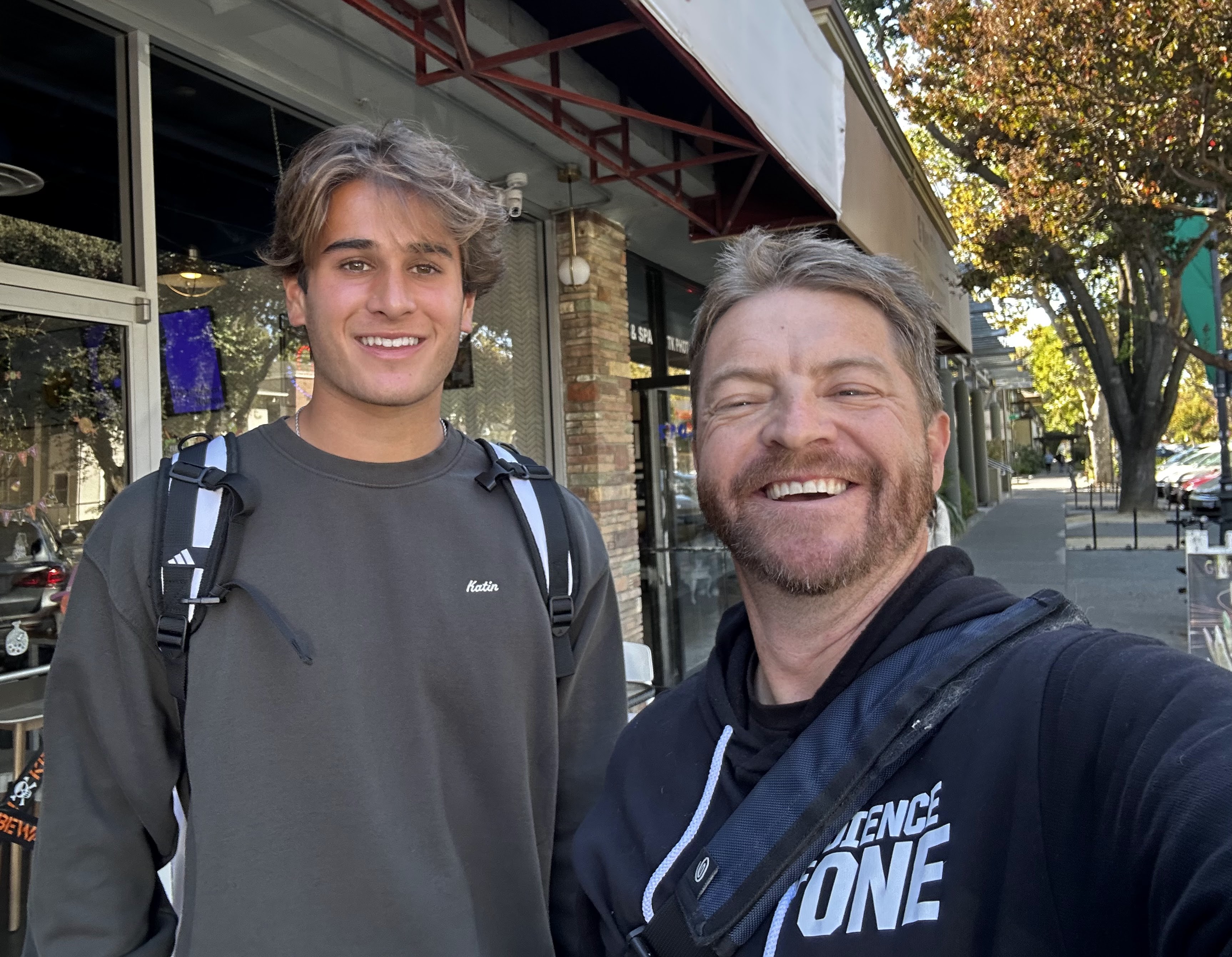
I got to do another chapel before the game the next week, and 5 new guys showed up, besides most of the original 6. Again I talked about how God allows you to play free, because in Him, you’ve already Won the true game that matters, your standing with God. I got to go to the next game, and they won again! It was amazing because after the game, I waved to them, and they waved back. They were so thankful that I came to watch them play, and invited me over to chat with them behind the bench. I also started grabbing meals or coffee with some of the guys from the team. One of them, Colton, received Christ on Oct 25, and I began discipling Him, as well as meeting other guys on the team. Another guy, Talin, received Christ on Oct 29. This guy had almost no spiritual background at all.
I kept doing chapels with them and having lunch or coffee with guys to hear their story, give council, share the gospel and mentor them to follow Jesus…and they kept winning. I would go to games and it was so amazing to have them excited to see me, thankful that I’m out supporting them, and giving me high fives and hugs after their victories. I met several of their families and their parents are so thankful that someone is reaching out to them.
They kept climbing in the standings and made it to the Big West tournament. Colton was going to get baptized on November 10 (alongside Shylee and a guy from the baseball team), but they kept winning, and so had to postpone it! In fact, the team ended up winning the Big West tournament, advancing to countrywide NCAA tournament, losing a heartbreaker to San Diego.
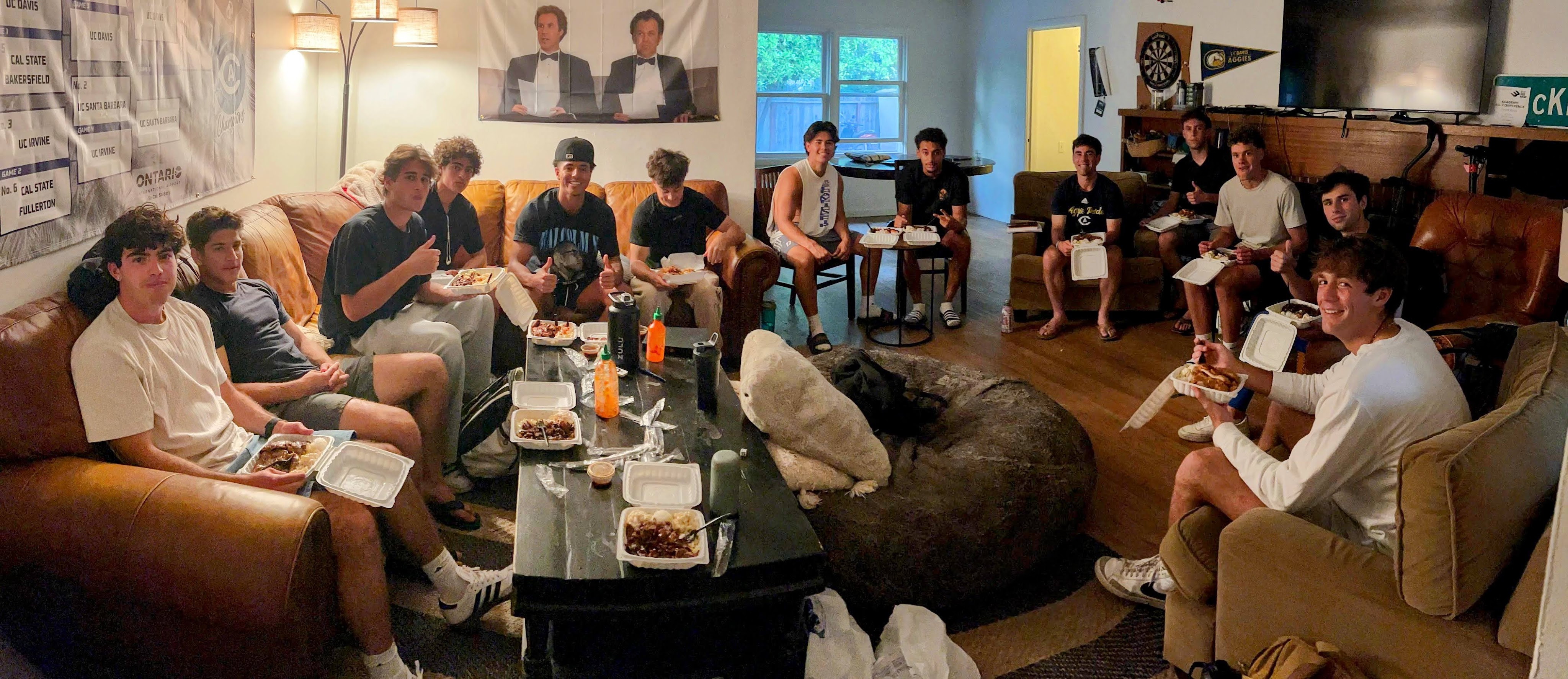
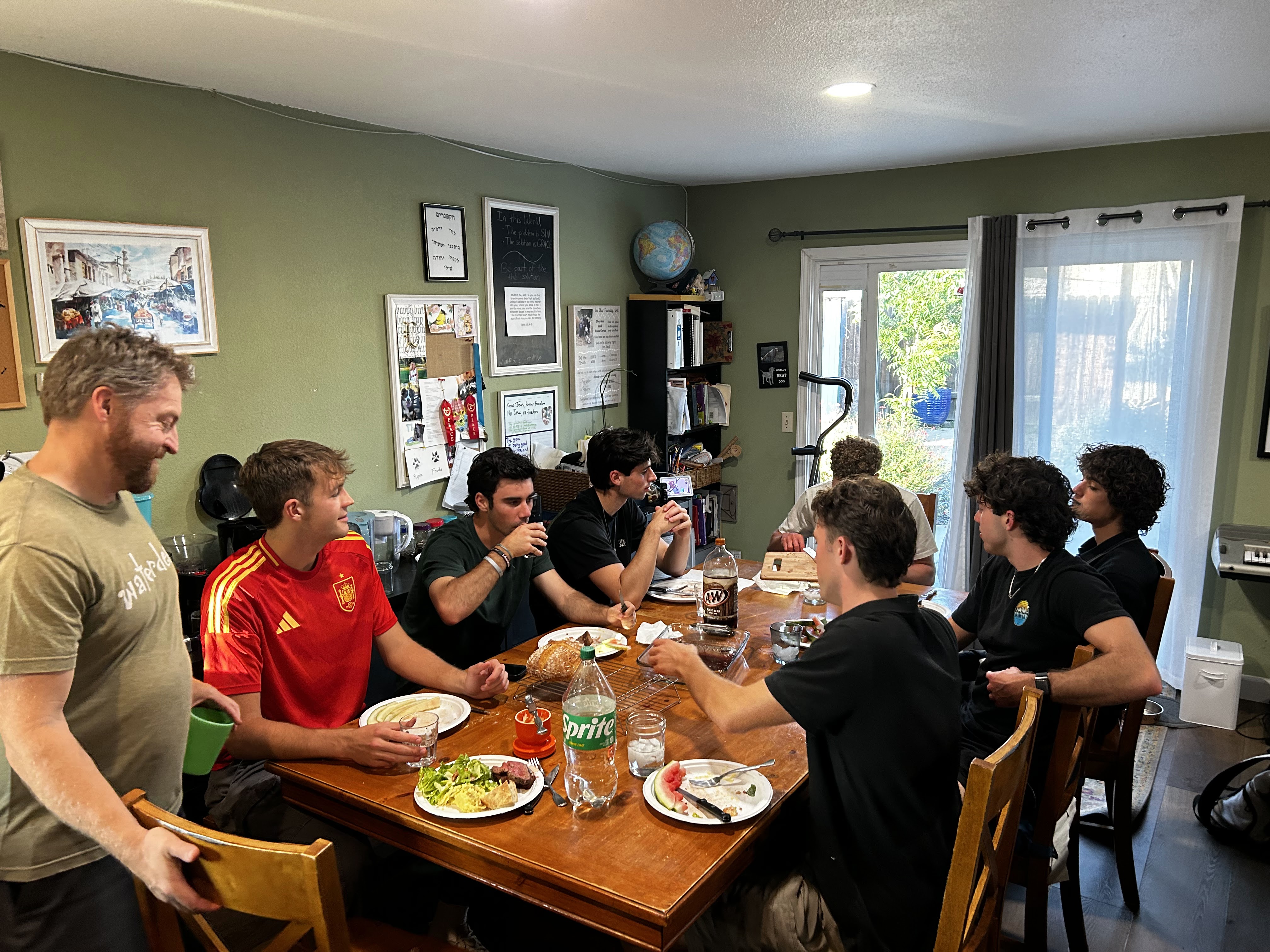
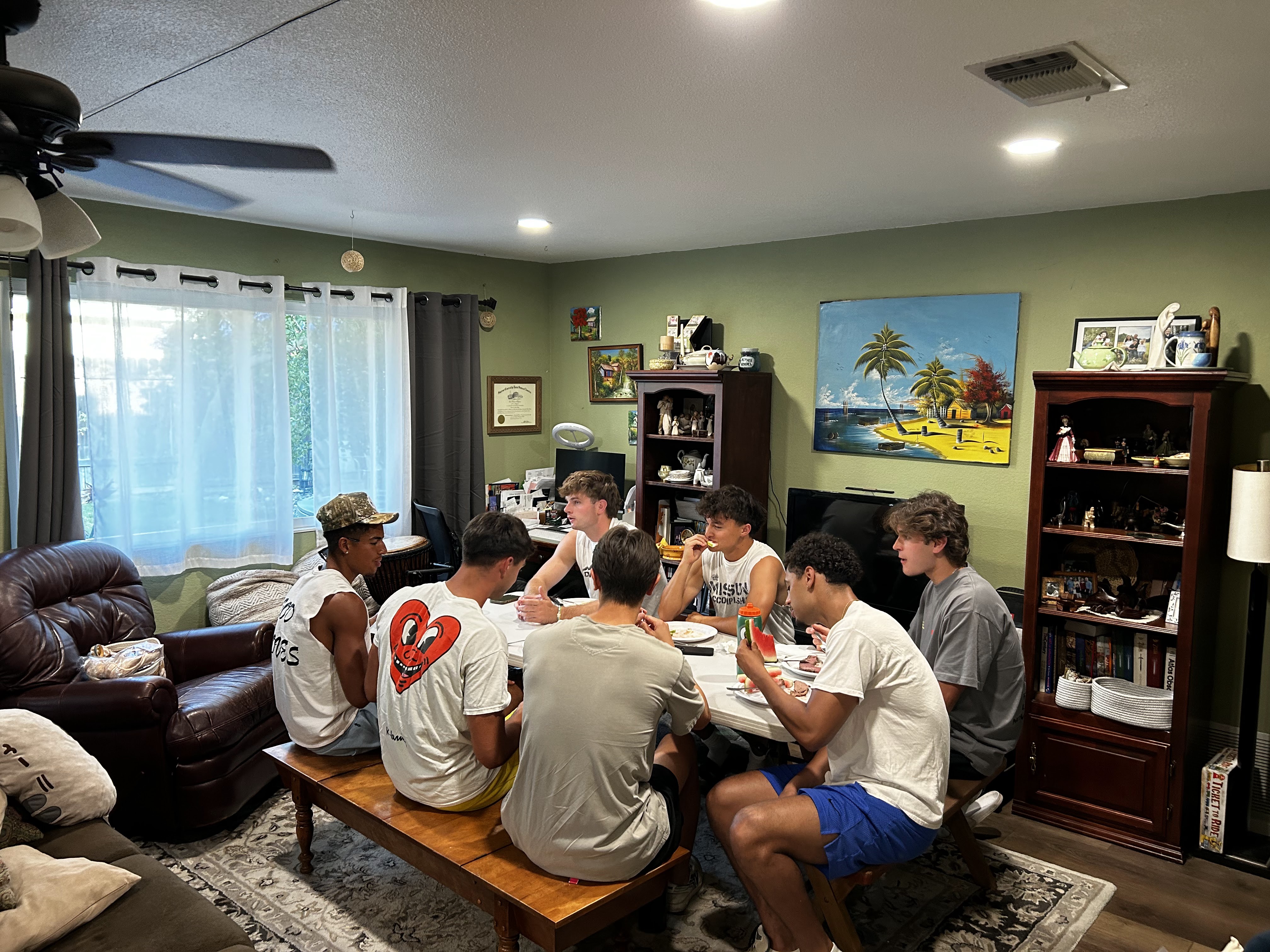
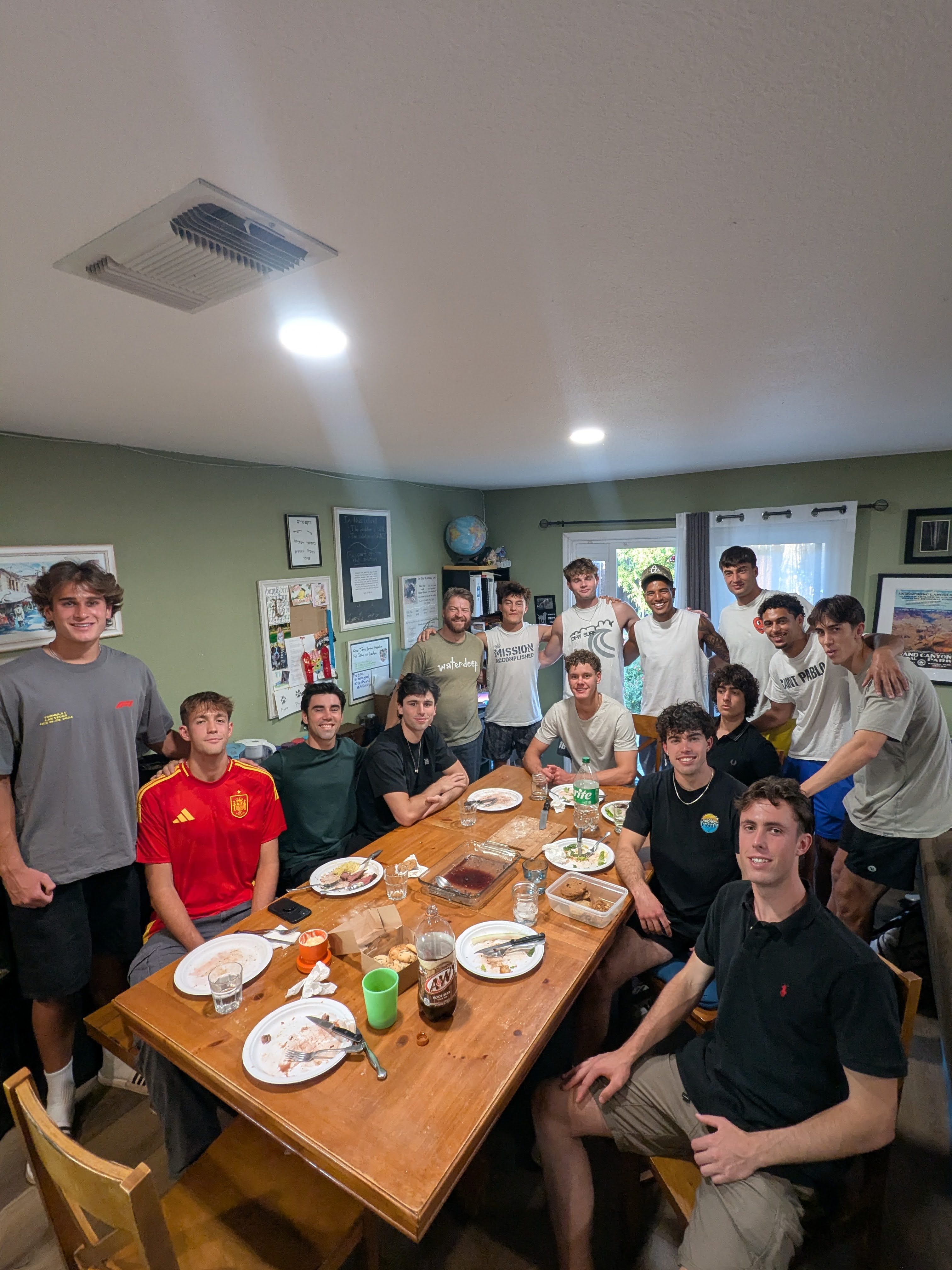
I had been meeting with guys individually or in small groups, but now there were so many of them interested that I simply didn’t have time to do groups of 3. So in January, I began a weekly Bible study. Our first was Jan 21st. I picked up some burritos and headed to a house where 6 of the guys live, not knowing what to expect. When 8 guys showed up, I was thrilled.
That night, I decided to have the guys share their spiritual story a bit, and man, they opened up. 1 guy had a pretty extensive church background, but others had been marginally involved in Christianity, but most of them had almost zero connection with Christianity at all. They shared openly their backgrounds, and an air of authenticity and honestly was apparent.
When we opened the Bible to look at our scripture that night, almost nobody knew how to find the verses. I love when that happens, and the guys who have a bit more background lean over the help them flip to the right book, learn what in the world Colossians 3:17 means.
So there it began, and grew and grew and grew. I would get their phone numbers and have lunch with them the next week (thanks so much for those who have continued to give financially to help pay for their lunches and weekly dinner. I spend about $1000 a month on food for these guys and it’s TOTALLY worth it. We are also well supplied by those who have continued to give. THANK YOU.)
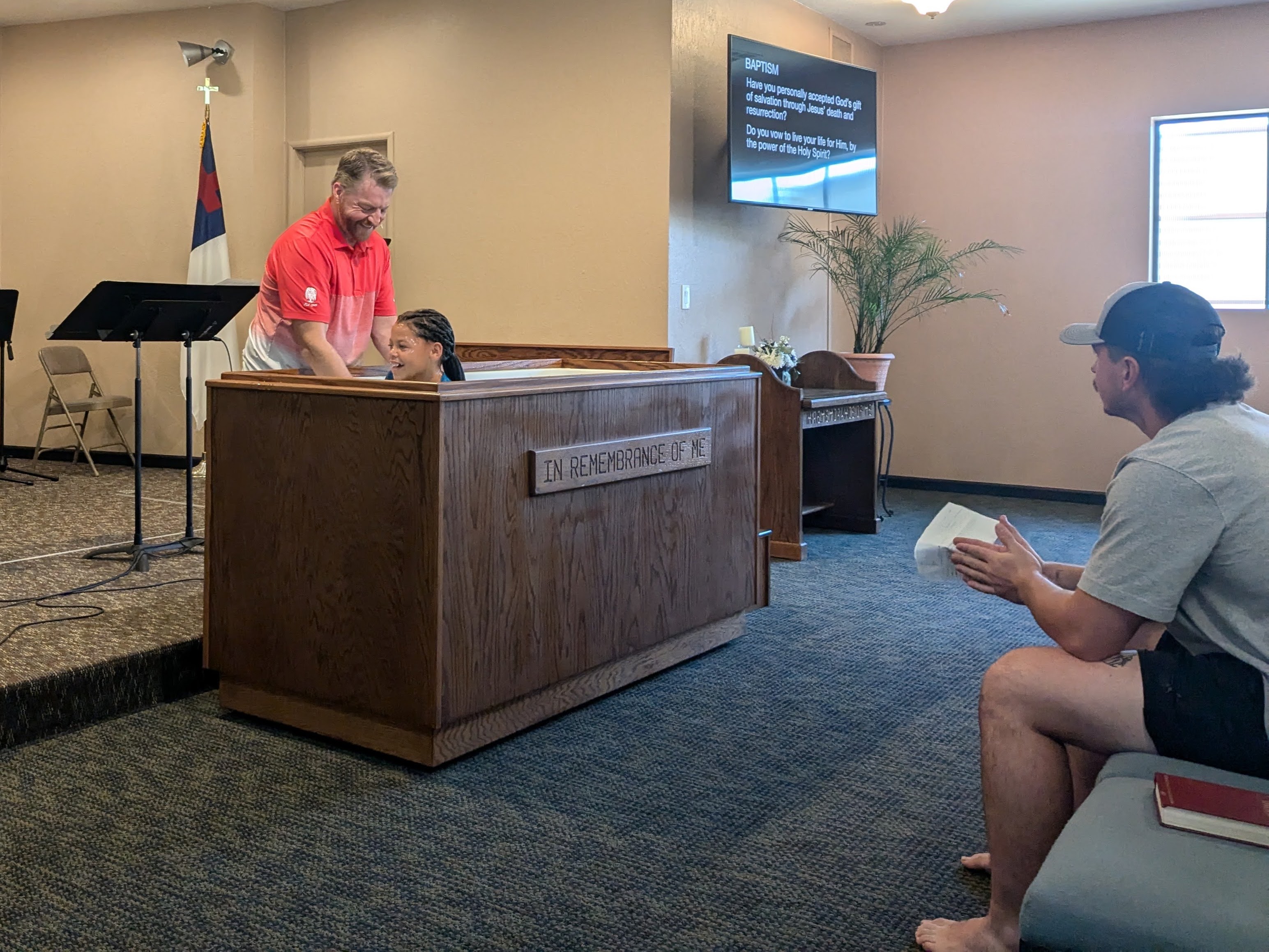
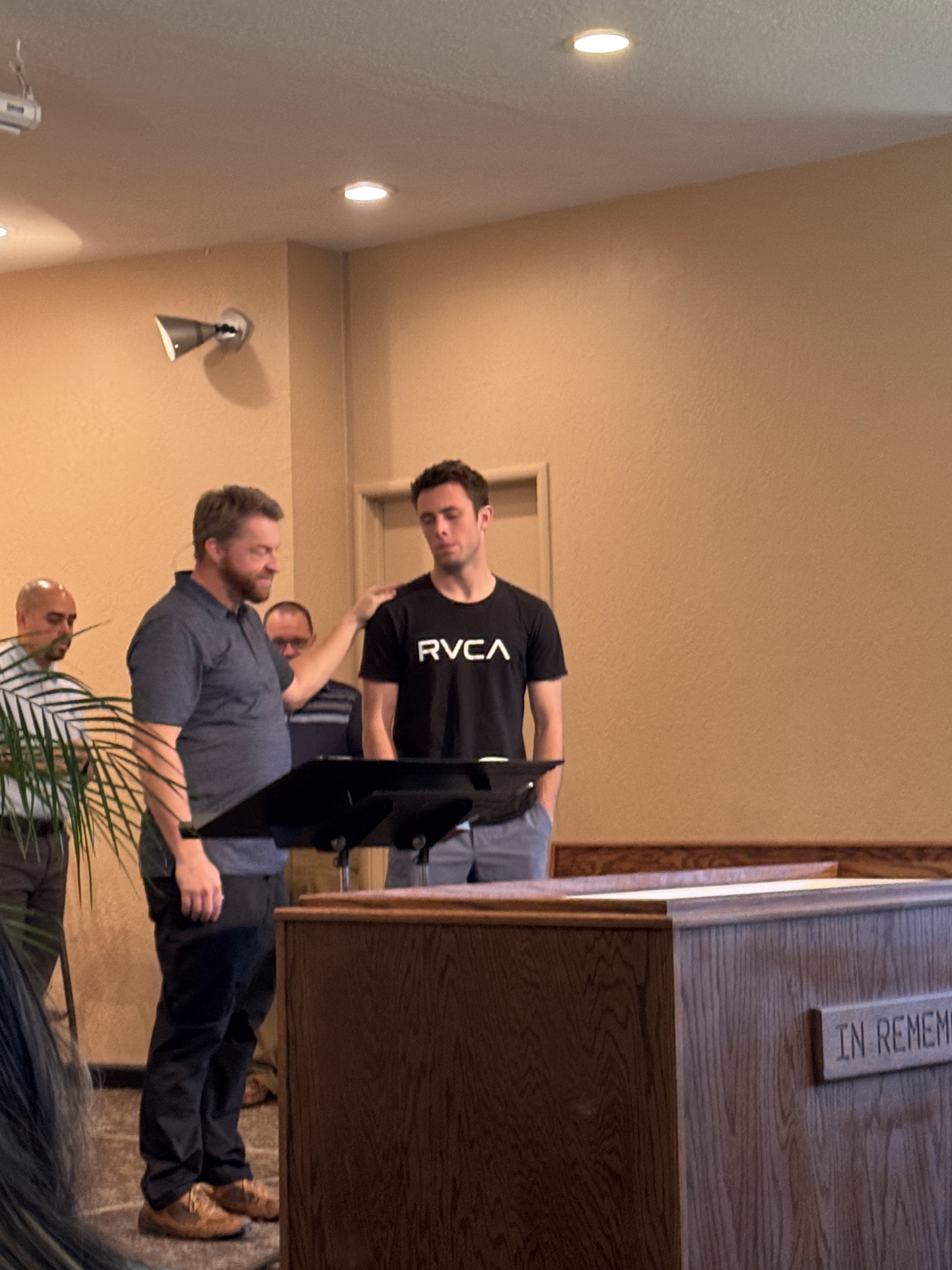
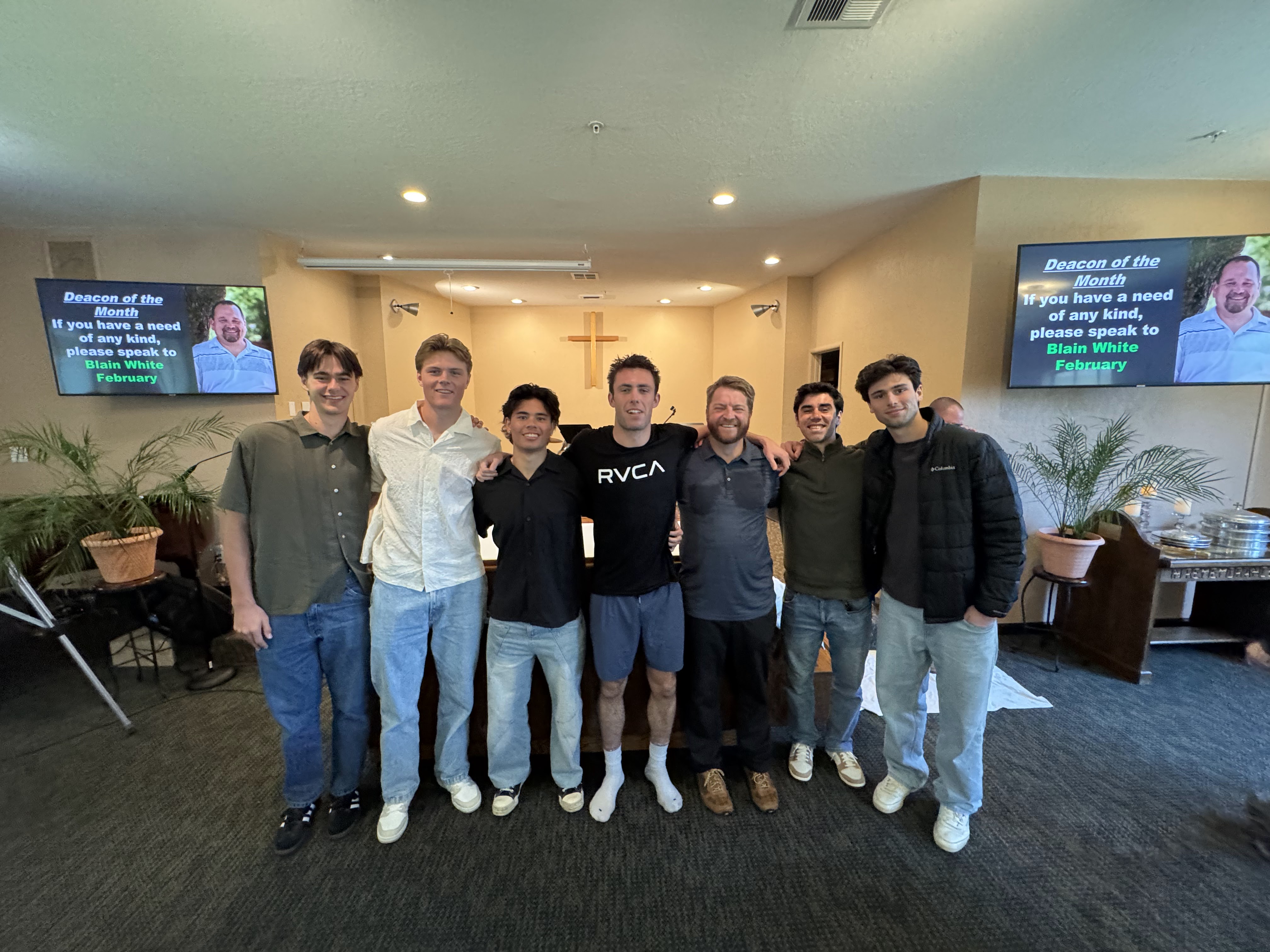
Anyway, when I meet with them I hear their story. I ask a few key questions. I share my story and I almost always share the gospel. On Feb 4, Cole prayed to receive Christ, and was one of the most overjoyed people I’ve ever seen, having finally understood. It was for sure lightbulbs going off in his mind and heart as I shared. He as so thankful. Then on Feb 9, Colton got baptized at Pole Line, and along with his family, 5 guys from the soccer team came to Pole Line to see it. On February 13, another guy prayed to relieve Christ in a similar manner. He is actually the roommate of Talin, who had received Christ back in October. Those 10 days were one of the most fun seasons of ministry I’ve ever had in 20+ years of ministry.
I started meeting with three freshman guys on the team who had all prayed to receive Christ weekly to go over the foundations of faith (assurance of salvation, confession of sin, the filling of the holy spirit, bible and prayer). We kept up Bible study on Tuesdays and oh yeah, I kept preaching every week at Pole Line Baptist, pastoring that congregation, integrating new members and many other wonderful responsibilities. 🙂
On May 4, Cole got baptized and a bunch of guys came to the church to celebrate with their brother on the team and their brother in Christ.
Spring quarter continued to be a fruitful time of our weekly bible study, and I added going to more soccer games, as they had their spring soccer friendlies (not official games, their season is in the Fall). We even had a game against Stanford in which about 10 people from Pole Line Baptist Church came, since some of the players have been dropping in every once in a while. We ended our Spring Quarter with a BBQ at our house.
Most recently, on June 25, Gavin received Christ, having grown up in the Catholic tradition very loosely, having a bit of church experience with a friend, and having attended our bible studies since about February. I’ll be meeting with him for the next few weeks for discipleship before their training starts back up mid-July.
So God has been doing amazing things. I will have ot see what reaching out to them ‘in season’ looks like, because their schedule gets pretty crazy. I know I’ll be going to games, dropping by practices and having chapels, but not sure if the weekly bible study will be too much for them.
I have a new calling, to be a pastor of Pole Line Road Baptist Church in Davis, CA. This will end my time as an employee of Cru. In this time of transition, I wanted to remember and say thank you.
Thank you Jessica, for inviting me to Cru. I can’t remember your last name, but I remember that we became friends in our dorm and you invited me to church my freshman year at Cal Poly SLO. We started going to Cru, and even though you left after a quarter because of the pain in your wrists, I’ll never forget how God used you to play a significant role in my life with Him. Thank you.
I remember going to Cru meetings, trying to figure out what was going on, what people were talking about. though I had a church background, I feel like I was asleep all growing up (literally at times, which is a problem because I snore). But people accepted me, loved me, cared for me. I remember Natalie getting up and saying she didn’t have anxiety any more, but peace, for God helped her ‘not worry about tomorrow, because today has enough trouble of it’s own’. Thank you for sharing your story. Thank you everyone for helping me find belonging.
Thank you Txxx, for talking to me at Starbucks, asking me questions, helping me start to meet with your husband xxxxx. Thank you xxxx, for going through new believer follow-up with me, helping me understand the gospel. Thank you for inviting me into your home for bible study with a bunch of senior guys. Thank you for making me feel normal by teaching me how to juggle, talking about life and teaching me the Word. Thank you for that men’s Bible study that helped. I remember one week when I just had a breakdown, and instead of pushing through and doing bible study, you stopped and cared for me. It remains a powerful memory and example of love and leadership to this day.
Thank you to Carrie Virtue and Jenn Ludwig who helped my freshman year to learn how to read the Bible. Thank you Joel Limpic, for teaching me and so many more how to worship God (Hallé, Tommy, Josh, Kurt, Holly, Josh, Chris, Travis, and so many more), and for being my prayer partner because it’s the only thing you could possibly think to do for me. Thank you Tim Romano for saving my life, literally, after you buried me alive, literally. Thanks Corey, for being my Central Valley buddy who I could fellowship with during the summers. Thank you Steve Bratton and Aaron Welch for leading a freshman Bible study my sophomore year, and for Tim Kirchner and Jeff Wood for being good friends in that bible study. Thanks to my AGO brothers for helping me so much to learn how to be in community.
Thank you Ken Virzi, for giving me vision for the Kingdom of God, Victoria Vance, for stability and steadfastness, to Jamey and Gretchen Pappas for inviting me into your home (or just let me in when I showed up at the door to play with your kids). You helped me see a healthy marriage and family. You helped me love God with all my mind, we SLO kids CAN handle that. Thank you for bible study my Jr, Sr and volunteer year (thanks guys). Thanks Molly, Christine and Erin for being great staff members in those early years, and I’m thankful we’ve remained friends. Thanks Erin for bringing Kent Matsui to the mainland and into my life.
Thank you Todd Peterson and Noah Stokes for Red Canary Productions, for letting a total dork of a kid be in some videos. It changed my life. I walked around campus hearing ‘It’s the Captain’ from random people over and over. What a surreal time. Thanks Ed Bort and Jimmy Williams for being great roommates and doing Settlers till dawn.
Thank you Andrew Paulsen for co-leading bible study with me for 2 years. Thank you Josh Soderlund for letting me ‘disciple’ you, even though you were older in years and in the faith. I remember getting to meet with Jack, a Chinese international student, him coming to faith and getting baptized in the Rec Center pool. It was amazing.
God did amazing things in SLO during those years as a student and volunteer. We learned how to worship, how to be a community, how to go through tragedy, how to reach out to others. I remember worship nights, bonfires, dinners-for-8, ‘I agree with Jimmy’, newspaper opinion page evangelism, Guns n’ God weekend, 24 hour prayer chains at the Mustang, seeing people come to faith during sharing times, popcorn or jello at W8 meetings, the Silo, Mott Gym, the PAC, Chumash, leading worship during summer Cru, camping in Big Sur and playing tree tag (Matt Nguyen), leadership meetings, Friday hikes or ultimate frisbee. My life was changed by God through so many of you. I remember so many more names and faces, even if you’re not mentioned specifically. Thanks for an amazing time.
Then off to UC Berkeley. Thank you students for welcoming me in. Thank you for Brad, Holly and Daniel for being a great staff team, as well as Kenny. Thank you Daniel for being a mystical, teaching me to pray and wait on God. I’ve needed it over and over. Thanks for the Dead Missionary Society. Thanks Holly for being so passionate about teaching and the ministry of the Holy Spirit. Thanks Brad for taking me to my first house church. Thanks for letting me go and pursue Lori. I’m sure that was disappointing to lose a staff member after 1 semester.
I remember ‘03 Lake Tahoe Summer Project, trying to find cell phone coverage to talk to Lori. Writing love letters. Thanks to my men’s group and our family group for sitting around in camp chairs having so many conversations. It was amazing.
South Dakota. Thanks Brian Kolling and Sara for leading the team. Thanks Dave Newendorp (for teaching me disc golf) and Dusty Hoffman for being roommates while I was engaged. Thank you Rick Pridey for having one of the most meaningful conversations of my life, confronting me through tears for how I was acting. Thanks Shanda for being a great teammate. Thanks Wendy Coble and Neil Downey for leading the USD ministry together. I remember counting cards in the ditch on the way down to Vermillion. If we hit 25 we would turn around because the weather was too bad. I remember ice cream cakes for leadership meetings. I remember freezing when I would drive home in my van, because the heater didn’t work any more. Thanks for Amber, Sara, Amy, Joy, Kyle, Dan, Barry, Chris, Dana (the first grad student I got to minister to and alongside), and so many others. I see your faces and remember praying with you and for you.
Thank you Steve Douglass for sitting down with an intern and his wife to talk to us individually at a Life Options conference. What humility from the president of a worldwide ministry. You encouraged me to go to seminary, because there’s not enough missionary theologians in the world. Thanks to Dennis Kaspar for having Lori join the Cru Legal Team, and being a great leader to her for all those years.
Thank you supporters. Some of you started when I did, in 2002. Some of you have been with me the whole time. I can’t believe that you would choose to give to God on behalf of a kid like me. Many of you started giving to Lori and I in 2005 and have kept with us all these years. Some came along later. I’m so very thankful for your prayers. We could not have made it without you. It wouldn’t have been possible to minister the gospel to college students and professors, to provide legal support, to teach bible classes, to go on mission trips, to lead summer missions, to grow our family or anything without knowing that you had the other end of the rope. You have called us, prayed for us, given to us regularly, give to us when we’ve had special needs. You enabled us to focus on the ministry, because we always knew you were on our side and there if we ever needed you, and we did. Thank you, thank you, thank you.
In Santa Barbara. Thank you Ken and Tori again for leading. Jon and Amy Eastwood, Kari Heywood, Chris Comstock, Josh Thomas, Brett Jensen, Karissa Bramer, Crystal Conroy (boy I hope I didn’t miss anyone). Meeting in the tent in Isla Vista, ministering to people partying, ‘I Confess… outreach. Thank you Ken, for letting me have your sophomore bible study. Those Bible studies are some of my best memories on staff. Thanks for the disc, it still hangs in my office. I’m proud of you all and still pray for you whenever I think of you (Tim, Austin, Wes, Ken, Tyler, Matt, Josh, Cliff…I feel like I’m forgetting someone, and I’m sorry). We got to go to the Ocean City Summer Project with little Isaiah in tow. I’m thankful for those days of working with guys in the military, surfer dudes, future doctors, future missionaries and so many more.
Then off to Flagstaff. Lifelines. Thank you Dave Blakkolb and Rita Greenwell. Rita, your exposure to the Organic Church changed my ministry philosophy. Dave, your leadership in grace and truth transformed me. Curt and Jana Hannover, Aaron Erkman, Chris and Elizabeth Guilbeau, Laura Patterson. I remember Rachel reaching out to Erika and Alli. There was Regina, Laura, Greg, Nate, Brendon, Lia, Leah, Meghan, Kristina and Sara and many other who are so precious to us. I remember paintball and mountain biking and climbing. I remember Frank always falling asleep coming home from every outing. Men’s trips to Moab, camping in Utah and hiking Buckskin gulch, the aspens and the desert. Bethany was born (I almost missed the birth because I was mountain biking in Sedona). I remember the Lifelines summer mission, meeting Logan and so many other good friends. I remember a lot of students coming to Christ. I remember taking everyone who visited to the Grand Canyon, which we were very willing to do.
Then leading the ‘09 Summer mission to The Dominican Republic. Thank you Steve and Andrea Cabrillos and Lori for co-leading with me. It remains one of the best projects I’ve ever done with Cru, and I’m thankful we got to do it together. Thank you Leyla Abreu and Prospero for hosting us, for sticking with it, for working together. Thank you for the students on the team. It was a great missional community.
I wrote a letter to Cru leadership asking to move to Santa Cruz and start Cru there, but they asked me to stay in Flagstaff. I’m so thankful they did. Otherwise I wouldn’t have gotten to work with Carolyn, Scott or Andrew and Leah. I was transformed by my relationships with Annie, Star, Dylan, Eric, Rich, Andrew,Oscar, Laurie, Mikayla, Sara, Kaitlyn, Shinaya, Kim, Hannah, Mersaydes and so many others (i know I’m not remembering nearly everyone, I’m sorry. I know Lori’s women’s Bible study was so important to her and to me as well). I remember playing ultimate most Fridays, even if it was snowing. I remember riding my scooter even if it was single digits. I’m thankful for so many friends, and for the church communities of Grace Church and Flagstaff Christian Fellowship. Thank you pastors Steve Cole, Dan Barton and Stan Johnson. Thank you Flagstaff friends for mountain bike rides, game nights, MOPS, BYO food picnics at our house or in parks. In those years I went back to the Dominican Republic a few times, got to go with Chris and Vanessa Warren, who remain great friends. I led the San Diego Express summer mission, which was great fun (thank you Jenn Hu for co-leading and thanks Dan Allen for rescuing us). These were some of the best years of our lives, adding Judah to our family, as well as many students. We learned a ton about God, about ministry, about ourselves.
We drove I-40 to LA or down I-15 to San Diego for many conferences, and I can’t even begin to list our staff friends. Over the years, so many mentored us in ministry and in family at winter conferences, staff conferences on the beach or in the mountains, women’s retreats, that one men’s retreat, summer missions, and team leader retreats. I remember so many friends, so many conversations. We would not have made it without you. You were as deep as family. Though we’re now spread out geographically and in jobs. I remember and am thankful. I remember running the book store and staying up past midnight reconciling the cash machines, selling books to staff and students, and going back home with about a 2-3 foot stack of new books every year. I remember leading breakouts, days of outreach. I remember leading the Explore Track on the San Francisco Winter Conference, one of the other greatest projects I led as a staff member. I can’t say enough about the staff family we had. Thank you for leaders in the PSW for caring for us. Thank you for the ops team (esp Drew Aufhammer) for always taking my phone calls. Thanks for the memories.
I’m exhausted and yet filled up from thinking of all that, and I didn’t get to Davis yet. Part 2 coming soon (maybe)…
You’re going on a short term mission trip. That’s awesome! My hope is this trip helps you become a global missional Christian, whose life is deeply changed because of what you experience. I hope you see God more clearly as you step into new cultural experiences—meeting people who are like you, yet different—and come away with a greater appreciation for the awesome diversity and creativity of God. I hope God uses you to bless the people on your team and the people in another place, in another culture, from another background. I hope this trip makes an incremental change in you to help you reach out to those back home both in your own culture and in different cultures.
What makes a short-term mission trip ‘good.’ What are the objectives we should shoot for? Our goals are both that we are blessed and that we are a blessing. These are both good motives. We want to get something out of a trip, whether we are the ones going, or the ones receiving. We want to be a blessing to the other, whether we are going or are receiving. When both being blessed and being a blessing are viewed as complementary values, the results will honor God and build His Kingdom. This idea goes back to the beginning of God’s people, in Genesis 12:1-3 — The Lord had said to Abram, ‘Leave your country and the people of your father’s family. Go to the land that I will show you. I will cause your descendants to become a great nation. I will bless you. Everyone will know your name. You will bring my blessing to other people. I will bless those people who bless you. But I will curse anyone who insults you. Through you, I will bless all the families of people on the earth.’ Abraham was to be like Lake Galilee, which has water flowing into it and water flowing out of it, to bring life to the whole nation of Israel. This is a picture God uses for His people–we are blessed to be a blessing.
Being Blessed
“Blessed be the God and Father of our Lord Jesus Christ, who has blessed us in Christ with every spiritual blessing in the heavenly places” —The Apostle Paul (Eph 1:3)
The goal for you as a participant of a short term mission trip isn’t drastically different from your long-term goal as a disciple of Jesus. Simply put, it’s to become more like Jesus. A short-term trip can be a spiritual greenhouse. Make sure you set aside time on your trip to draw near to God in an undistracted way—take time to spend time in prayer alone and in groups. Keep a journal of what you’re learning. Read your Bible daily. Use your time traveling and your down time to read, pray, listen to sermons or worship music, as well as hanging out with friends.
On a trip, you’re experiencing new things. New things are exciting. New things are hard. New things can cause you to think and feel differently than you’re used to. New things can cause you to want to shut down. It’s good to not just experience new things, but to think about what you are experiencing. Think about why this is good, or why it is confusing or hard. Learn more about a new culture. Ask yourself, ‘what new things about God could I learn from these new people, places and things?’ God is the Lord not just of you and your culture, but is the Lord of Life in every culture. He has designed the world so that a multitude of cultures exist. When we experience new things, we are pushed to grow, to expand, to get beyond our ‘normal’. These new things are a great way to grow in your trust of God in the midst of hard things, as well as to grow in your praise of God in good things and your thankfulness that He is such a good and creative God.
On your trip, you will experience crossing cultures (if you do the trip right). Each culture has different values and beliefs that drive what people do and what they don’t do. If we want to honor God, we need to know how to love, respect, and honor others, but love, respect and honor are experienced differently in different cultures. One of the goals of your trip, whether you knew it or not, was for you—with God’s help and the help of your team—to grow in your cultural intelligence, so that you can have a lifetime of blessing others.
You are on your trip to be blessed—to be blessed with really fun and awesome new experiences and to be blessed with being transformed to be more like Jesus. But if that becomes your only focus, or even your primary focus, then this won’t be a mission trip, it will be a church-sponsored vacation. No! Like Abram, we are blessed to be a blessing.
Being a Blessing
“It is more blessed to give than to receive.” —Jesus of Nazareth (Acts 20:35)
The goal for your short-term mission trip isn’t drastically different from some of the goals of everyday life—learning how to bless other people. It’s helping people hear about and experience the love and sacrifice of God. It’s learning how to become a servant by meeting others’ needs and in doing so, to experience the blessing of God.
What does this look like when you’re on a mission trip? It looks like laying down your plans, your schedule, and your preferences to serve the local gospel workers in their plans, their strategies and their preferences. When you travel to another country, the leaders of that country are like the head coach. You are there to please and serve the head coach. You don’t get to set your own practice schedule. You don’t decide the lineup for a game or match, the head coach does. Your trip is there in order to serve the coaches (the local workers), not yourself.
I led the first summer trip to the Dominican Republic in a new partnership reaching college students. When we got to the country, we learned that the local staff member had received many missions trips in the past, and had seen many, many students indicate decisions to follow Jesus, but these trips never had any lasting effect to build the ministry. The students wanted to hang out with the Americans, but never connected with the Dominican believers. So we spent many days in conversation about what we should do, and finally landed on the goal for our 5 week trip to find student leaders who could help her lead the ministry. We pivoted from reaching out to the general student population and decided to focus on an English language program. We made sure to be outside the building during every break and after classes were done for the day to build relationships and share the gospel. We started a meeting to disciple believers and platform the in-country staff member to share her vision for the campus ministry. We had a leadership meeting at the end of our 5 week trip and had 5 student leaders who wanted to work towards the vision of building a student movement on campus. The staff member who initially had her resignation on her desk before our mission trip kept working in that country for 15 years and counting after our trip. We went to bless her, not fulfill our own goals.
As a participant on your mission trip, be flexible. Lessen your expectations. As a trip leader, loosen up your grip on your plan. Communicate well and frequently. Be a team player by not merely deferring to the local ministers of the gospel but by actively looking how you can serve. Follow their rules and follow their game plan. If you do well, they will reap the benefits for years. If you do poorly, they will be the ones cleaning up the mess.
Go, asking the question, ‘What can we do to be a blessing?’ There will be times when cleaning up garbage, doing repair work, or teaching English will be the biggest blessing. There will be times when doing sports camps or playing games and meeting hundreds of people and doing huge outreaches will be the biggest blessing. You may have one thing planned, then something unexpected comes up. BE FLEXIBLE! You may plant a new church in a village, show the Jesus Film, meet college athletes, disciple younger believers or spend hours and hours in prayer.
Our biggest goal for the short-term trip is to be a catalyst and a help to the overall strategy and plan of the local ministry. Our goal is to be a sidekick to the real heroes (the local, long-term gospel workers), not to be the heroes ourselves. If we do this well, then we will get our goal, hearing national leaders say, “They were a blessing. We are glad they came.”
[This blog is based on a family-focused advent devotional that I recorded in video form for my church. I am sharing a version of it here in the hopes that it might encourage you as well!]
I’m excited to share with you during this season of Advent. Today we are going to look at a passage that most people have heard or seen before, but may never have thought about how amazing and full of meaning it is for our lives. My hope is that you can take a fresh look at it with me and be amazed at God’s good gift in Jesus.
John 3:16-17 says: 16 “For God so loved the world,[a] that he gave his only Son, that whoever believes in him should not perish but have eternal life.17 For God did not send his Son into the world to condemn the world, but in order that the world might be saved through him.”
I cannot comprehensively cover this verse, but I want to focus in on 4 key words/phrases. First is the phrase “God so loved…” Our God is a God characterized by love. This might sound normal to you, but it distinguishes Christianity from almost every other religion. The God of the Bible is personal, involved, engaged, and caring. His commands are out of love and for our flourishing. God loves enough to act so that we can be saved from the brokenness, corruption and evil caused by sin (both the sins of others that affect and hurt us and our own sin as well).
Second is the word “whoever.” This means “anyone.” There is no stratification, no additional ifs that restrict the kind of person that can be included in the phrase “whoever believes in me” here. This passage is not saying that you can only believe in Jesus if you are pretty good and haven’t messed up too bad, or if you have built up enough good deeds, or if you look like you have it together. NO! This means what it says – whoever! Jesus right in this very passage is talking to a very religious person—a Pharisee named Nicodemus—so he is pointing out that the same thing is required of both the religious and the non-religious as well – they must believe in Jesus.
And that brings us to the third word: “believes.” The kind of belief this is talking about is an “all in” kind of belief. It’s not an “okay, I guess I believe that if I will get something out of it” kind of belief. Jesus is not like Santa Clause, about whom tradition says if you believe in him and are good, then he will give you good gifts… No! Believing in Jesus means that we understand our desperate need for God to intervene to save us. It means we know that we aren’t good enough on our own, but we need Him. It means that we trust God and know he is the only one who can accomplish His plan to save us.
So what are we to believe exactly? The next phrase tells us: “in Him.” If we are going to believe “in him,” it means we need to know who he is—He is God with us, the Messiah, the promised one. It also means we believe that we need Him. We recognize that we are, without Him, moving towards death, towards “perishing.” We recognize that the only way to have eternal life is through Him because God accomplished his rescue plan through every aspect of Jesus’ miraculous life: his promised birth, his birth, his childhood, his years of ministry, his death and his resurrection.
I understood this concept as a kid, but I didn’t want to need to be rescued. I thought it was nice that God could give us eternal life in Jesus, but I also wanted to feel like I deserved God’s favor. I didn’t realize that I was undermining the gift of God by trying to earn it. The reality is that, from the first chapters of Genesis, right after Adam and Eve sinned and chose their own way over God’s way and plan, humans were on the path to death and destruction—unless God intervened! So from that time, out of love for the people he created, God began to execute his rescue plan to send Jesus as THE WAY for people to go from death to life.
So the sequence to remember is this: We Learn about and see God — We choose to believe in Jesus — We can be confident that we have eternal life.
Then here is the cool thing: knowing that we have eternal life changes how we live here in this life too because we have the ability (through his love, example, and power, not through our own effort) to do good and love people. We do this, not so that we can earn God’s favor, but because we already have his love, the incredible gift of relationship with Jesus, and the promise of life with the one who loves us unconditionally forever.
If you believe this, you can join me in saying “Thank you, God, for saving me.” If not, I encourage you to stay on your spiritual journey and seek to learn about and come to know the God who loves you.
This summer, Jeremiah and I both had the assignment with our ministry of sabbatical. Although we are now deep into the busyness of Fall, we are so thankful that we were given that time to step away from our normal rhythms of ministry (and also legal responsibilities for me) for a couple of months in order to focus on personal reflection, development and rest.
This was our first ministry sabbatical, after 20 years of ministry, so it was needed. The Lord used the time to teach me some things about myself and about his care for us. I thought my growth would come from extra reading and devotional time, and I did find it refreshing, but some of the deepest growth came as I confronted my tendencies toward the idolatry of productivity.
I have a tendency to define myself with a rubric that includes the following: 1) my own sense of productivity and accomplishment and 2) the subjective feeling that others are pleased with my work. So when I paused my normal work, I was tempted to replace it immediately with “fixing up the yard” and “reading lots of books on my list” in order to feel good about myself. But I realized that wasn’t going to lead to true rest because it was just staying in the same mode. I began to reflect and realized I need to be consistently aware of where I am rooting my primary sense of self. I asked myself: “what would some of the symptoms be if I allow my tendency to root my value in productivity and accomplishment dominate?” Here were some possible symptoms I came up with:
Unintentionally putting pressure on my children to also perform to gain value.
Losing the joy of investing in people out of love, and not for what they can then produce (and therefore becoming less effective at pointing people to the true freedom we have in Christ because I wouldn’t be living out that freedom well).
Feeling unable to truly rest in God’s unconditional love and allowing the lie that ‘I must be disappointing him’ to creep in instead.
I don’t want those symptoms. I have to admit that putting pressure on kids to perform academically has become a greater temptation as we sit like frogs in the academic heating pot of Davis culture, and as we approach many years ahead (starting with this year) where our children will be submitting college applications. Yet I actually deeply want my kids to be free from that pressure. I want (and expect) them to work hard, but I want them to do so not in order to have value, but because they know they already have value, rooted securely in love, and believe that hard work has its own blessings. I want them to desire to love and bless others, not so that they win respect, but in order to reflect God’s beauty and goodness in the world. I want them to see—hopefully modeled through the way I live—that there is a deep and true freedom that enables us to love and invest in people—not so that we get respect or praise—but because we love them as God loves us (I Jn 4:7).
I also want those that I serve through ministry to experience this same heart. Jesus truly did come to bring peace into our lives. He said in John 14:27 “Peace I leave with you; my peace I give to you.” Yet we know that this promise did not mean the absence of interpersonal challenges, because he faced them; it did not mean the absence of physical or financial challenges, because he suffered them; it did not mean the avoidance of global conflict, because it was certainly around him at that time. Instead, the peace has to be more deeply rooted.
These truths help me remember that I am first a disciple and follower of Christ myself, and that my desire to encourage others to also follow Him must flow out of my confidence that there is no better place to be rooted than in Him.
I am thankful that my sabbatical did not just turn into another “task.” I needed to be free from the pressure to do or learn something profound to feel like my sabbatical was worth it. Realizing that allowed me to learn. I want to take the long-term view (just as I always tell my students to do). I will have a greater impact if I am healthy and if I am walking in the freedom that comes from deep dependence on God’s grace. Tim Keller, in his book The Prodigal Prophet, said:
“To reach heart bedrock with God’s grace is to recognize all the ways that we make good things into idols and ways of saving ourselves. It is to instead finally recognize that we live wholly by God’s grace. When we’ve reached bedrock with God’s grace, it begins to drain us, slowly but surely, of both self-righteousness and fear.”
My first week back to my normal work responsibilities, my boss commented in a video call that I seemed very relaxed. I did not expect the comment, but I hope that what he saw is evidence that I am living each day, and accomplishing each task, with awareness of the light of God’s grace at work in my life.
On Mother’s Day, as I sat in church thinking about my journey as a mother (involving 3 birth kids, 7 foster kids, 2 adopted kids), I remembered the pressure I put on myself to figure out how to parent right before my first son was born. I felt confused, frustrated, and worried as I read books that seemed to contradict one another about things like handling a baby’s crying, bonding with my child, and teaching obedience. How could I do it right, if “experts” couldn’t even agree, much less the different parents and mentors in our lives. Now, don’t get me wrong—I still put plenty of pressure on myself nowadays, and parenting teenagers is a whole different ballgame, but my perspective is a little different now.
Early on, I subconsciously believed that if I could just do things perfectly as a parent, then my kids would be guaranteed to turn out great. And I also allowed the perhaps more damaging belief to creep in as well—that if I didn’t do things right, it would be “my fault” if they didn’t end up healthy, well-adjusted followers of Jesus. I think we all know that is a lie, but we still spend a lot of our time acting like it is true, and beating ourselves up for not living up to whatever we see as the standard (somewhat culturally determined, and somewhat affected by nurture, personality, faith, and our individual passions). Sometimes, people swing to the opposite extreme—they justify almost any bad parenting behavior, by just saying “well, nobody is perfect.” I have seen the result of just “not parenting,” and that is not a good option either. Our choices do affect our children, and we should strive to model a good path for them, but we also don’t and shouldn’t try to take responsibility for everything in their lives.
So how do we handle the fact that failure is everywhere, yet we still long for what is good and right, and we truly do want good for our children? It is a tension…I want the best, but I can’t even live up to it, so how can I expect my children to?
Let me share a very brief picture of my “failure is everywhere” experience by sharing two of my very recent mundane parenting fails that might feel insignificant, but are the very kinds of things that plague us. Maybe you can relate—or maybe I am just weird. First, when a certain child left her backpack out (again!) after getting home from school, despite my reminder as she walked in the door, I failed to display patience and to calmly communicate my expectation that she try again and put it away. I instead resorted to sarcasm and a demeaning comment; I felt instantly bad. Second, when I was at a flea market, I bought shirts for two of my girls, but didn’t get one for the third girl because I wasn’t sure she would like them…but then she felt hurt, and I beat myself up for not deciding to get it for her too. I didn’t want her to feel unseen or undervalued.
I have found, through the hard knocks of parenting so far, that there is no parenting formula, but there are helpful parenting principles. One key principle for me is to both accept and live out grace and truth, with patience. Successful parenting means that I guide my kids to value what matters most and brings true happiness—having healthy relationships with God and other people, and using what we have to be a blessing. It means that I seek to discover and live out what is right and good, actively modeling it for my children to the best of my ability, yet also modeling the practice of admitting when I am wrong and walking in humility, grace and truth. It means I help them discover the freedom of joyfully doing good in the world—not so that we can earn our place and prove we have value, but because we know that we are already secure and full relationally, with a God who accepts and loves us, and hopefully family that imperfectly roots us in unconditional love as well.
Prominently positioned in our family room, we have a poster with some of our key family principles listed. It says “In our family, we …” and lists things like “choose respect,” “learn and grow,” “obey our Lord Jesus Christ,” “are for, and not against, one another,” “admit when we are wrong,” and more. We frequently refer to it in the midst of arguments. I confess that I don’t live up to our values in all of my actions all the time, and neither do the kids. So how do I deal with those symptoms of hypocrisy in myself? Well, I accept the truth that I missed the mark and receive the grace from the Lord that reminds me I am his beloved child. I then also seek to extend that to my kids. I have to receive God’s love to be able to offer it freely. Both wisdom and compassion and forgiveness and grace come from God and His Word, and the best way to live them out is to consider and openly talk about these truths and principles as we live life, in the midst of all of its ups and downs. Deuteronomy 6:6-7 says “And these words that I command you shall be on your heart. You shall teach them diligently to your children, and shall talk of them when you sit in your house and when you walk by the way, and when you lie down, and when you rise.”
I want to use God’s Word as a guide, not as a cudgel. Ephesians 6:4 “do not exasperate your children; instead, bring them up in the training and instruction of the Lord.” My deepest hope is not that my kids would be perfect, but that they would think rightly (about themselves, life, love, joy and hope), and that they would let it affect how they live.
So I have to parent with something better than perfection in mind. I want them seeing how I deal with my failures and disappointments. Rather than hate myself for my weaknesses and mistakes, even in my parenting, I can see those weaknesses as an opportunity to live out humility, thankfulness for God’s grace, and contentment in the midst of my struggles. I can keep going, not because I think I can achieve perfection, but because I have hope in Christ, the one who is perfect, and yet compassionate and patient with us. He loves us and gave himself for us so that we can have peace. We can taste it now, and can know we will see its true fulfillment in eternity.
I love my children. Parenting is the hardest thing I have ever done, and also the greatest gift!
Growing up in a Christian community in the 90s meant I had some cheezy Christian shirts. One of them was a little illustration of a bunch of different fish going one direction, and then a Christian fish going the other way. It said “Go against the flow.” I think it was supposed to help me remember that, even though it might not be popular to trust God and His Word, it was still worth it. Nevertheless, something about the way it was framed caused me to understand the verse, Romans 1:16, which I memorized as a girl, with a certain unhelpful lens. The verse says “I am not ashamed of the gospel, because it is the power of God for salvation of everyone who believes.” I reinterpreted it with a “Look at me. I am going to stand firm, even if others don’t…” mentality. That “us/them” thinking and the resulting self-centered focus completely misses the point. It isn’t about me—it’s about God. The verse is actually saying that I have been given the gift of good news—an incredible foundation of hope, love and meaning for life—and I can have the tremendous privilege of sharing that good news with others, so they too can have that hope.
The Apostle Paul is “eager” (v.15) to share the good news broadly with people from all different backgrounds and experiences. He knows that the good news of Jesus transforms people. He wants to invite people into the hope and freedom that is NOT found in being religious and is NOT found in rejecting God and going our own way, but is found in receiving God’s gift of righteousness and life by faith, and then walking with Him by faith.
I believe that nothing in the world can offer peace, love and hope in the midst of a struggling world like Jesus does. That I see him, know him, see myself the way he does, and love people with the love he has shown me, is absolutely the most important thing about me. I am not ashamed of him, and look forward to spending the rest of my life journey continuing to follow him and live for him.
Yet it can still feel hard to identify as a Christian.
So what do we tend to be “ashamed” of that feels tied to the trappings of Christianity in this culture? And is that the same thing as being ashamed of the gospel itself? I believe the answer is a clear no. I do, however, need to make sure that the gospel I am proclaiming is the good news that the Bible is actually about—centered on Jesus, not my preferences or my comfort. I must avoid the painfully common us/them thinking that leads to arrogance, hate and judgmentalism, and instead live as a follower of Jesus, filled with love and humility, rooted in truth and walking in grace. If I do, I indeed will often feel like I don’t fit very well in the dominant culture. The good news of Jesus is for all people and cultures, so it will challenge tendencies in every culture.
Principle-based living and the hard work of nuance.
When I look closely at Jesus’ life, I see that he both loved and challenged every pocket of society, from the deeply religious to the social outcast to the Roman soldiers to the zealots who wanted to overthrow Rome. He was not ashamed of truth, and he determined to live out the will of the Father (Jn. 6:38), even when it meant upsetting the elite of his day. He did not jump on bandwagons or seek out power and prestige, but preached the Word and acted with compassion. He did not just pick what seemed best for him and his reputation, but chose the way of service and sacrifice.
So my standard cannot be to avoid what is uncomfortable. Neither can it be to choose what feels right in my own mind. God’s Word is clear that a gospel-centered life will always include love, not selfishness, as a motivating and animating principle (Colossians 3:14).
We have all heard the proverbial phrase “Don’t throw the baby out with the bathwater.” This is the challenge for true followers of Jesus today. We are called to reject the cultural trappings of arrogance and hatred, politics and nationalism, and “look-down-at-others” judgmentalism. When popular expressions of Christianity feel like they are marinated in these cultural attitudes, let’s do the hard work to instead marinate ourselves in God’s Word. Let us not reject Jesus, but rather get to know him, and make him Lord and King in our hearts and lives. “For I am not ashamed of the gospel…”
I don’t want to be, but I am like a moth drawn to a flame.
I don’t want to be, because I know that, even when I get or achieve that thing I want, there is just the next thing. The next thing to accomplish, get, experience, feel…
I was playing a game the other day, and I had made my plan. I had a few steps envisioned that would get me into a better position. Very quickly, every path I had was cut off by an opponent. I suddenly had no plan. I felt like the options were gone, and the whole game suddenly felt very unsatisfying. I am ashamed to say that I became irritable and rude to my fellow players. Granted, it was just a game. I could get up, apologize for my sour attitude, and move on with my life. But what about when life feels like that?
If my life is built around seeing certain things happen, then when more complications come, or my plans become disrupted, it can feel hugely destabilizing. It is loss. Similarly, if my desires begin to shift due to disappointments or evolving perspectives, and I don’t even know what I really want anymore, that too is destabilizing. Part of the problem is that our culture has brainwashed us to think that self-fulfillment and self-actualization are what will lead to happiness. Therefore, if we don’t know what we want, or if we aren’t as good at something as we thought we should be, we can feel like we have failed.
“Self.” “Me.” “My.” Much of our culture says each of us is the center of our own lives. We are each at the center of our dreams and hopes. No wonder selfishness feels so normal. Abraham Maslow’s theory of human motivation has “self-actualization” as the pinnacle of his hierarchy of needs with the goal of achieving one’s “ideal self.” This ‘focus-on-your-needs-and-achieve-your-potential’ mentality feels very normal in our present-day life in the United States. The theory seems to posit that if we can discover who we are and achieve what we are capable of being, then we can find happiness… This framework can analyze the lives of successful people who made a difference in society and conclude that they achieved self-actualization because they realized their full potential through doing great work for society (e.g., Gandhi, Abraham Lincoln, Nelson Mandela). Therefore—it could be extrapolated—a person who wants to achieve happiness should focus on his development opportunities, and find challenges to enhance his skills and realize his full potential.
I think this framing cheapens the accomplishments of history if they are really about individual “selves” achieving their potential. If we all have this individualized lens in looking at both history and our little dot of a life in the grand scheme of history, do we expect that perspective (e.g., making my goal achieving my potential) to bring peace and satisfaction? One reason it can’t bring satisfaction is that it is too small and weak. Another reason is that it causes tremendous stress to have to figure out my potential and to worry constantly about whether or not I am on track to achieve it. How do I recover from feelings of failure, except to either lower my standard or re-double my efforts?
For example, I might have a vision for an ideal of mothering that I think I should be able to achieve based on my knowledge and potential. And maybe there are days when I live it out well. But what about the other days where I fail…and what about the uncertainty of the “product” because I can’t actually control if each of my five children will be happy, safe, secure, emotionally/physically/spiritually healthy, and successful in their own lives? To give another example, what about the ideal of career success that I believe, if unhindered, I could achieve? If I am not advancing towards it, peace or satisfaction feel far off, and then I might tend to blame and resent the things in my life keeping me from that ideal of success (maybe even my spouse or my children, who require so much of my emotional energy). I will be tempted to say no to anything that could hold me back, and in the process will undermine my ability to experience or live out real unconditional love, which the Bible describes with words like “it does not insist on its own way; it is not irritable or resentful…Love bears all things, believes all things, hopes all things, endures all things…” (I Corinthians 13:5-7).
There is in fact a much more compelling vision for life that is not focused on “self,” lived out most compellingly in the life of Jesus. In fact, I believe the real core of human relationships and human meaning in the world must be grounded in love, not self. The only way to move away from my selfishness is to replace myself as the center of my life. But it can’t be another person in my circle. They also can’t handle being the center. None of us have the right gravity. We can’t handle keeping things going without everything crashing into itself. We don’t have the ability to set up the world perfectly to sustain life—spinning at just the right speed, with just the right distance from the sun, with just the right gravity from the moon to keep the tides going, with just the right atmosphere so that the water cycle works, and all the other myriad of details that only God can handle.
So it is God who must be at the center, not me. But why do I keep trying to claw my way back into the center? I somehow can even make it about me when my children disobey me (don’t they know how hard it makes it for me when they do that?). I make things about me when I worry about possibly offending someone that I barely know, because somehow I think it deeply matters if they think I am a good person. I am not actually that important.
Freedom comes from grounding myself in the love God has so graciously shown to me, and from knowing that, as someone made in His image (Genesis 1:27), I get to reflect his goodness and be part of what he is doing in the world. That means being part of serving other people, seeing them as more important than myself (Philippians 2:3), because I see them as equally beautiful and made in God’s image, just like me. I can be free to fail, because I know that when I admit my weakness, it all the more reflects just how good God is as he loves and restores and transforms me. I am at rest because I am relationally loved and secure, and I can be part of that rest for others as I share that love with them.






















































 The Kepner Family