Hope and Patience

I don’t know about you, but I am often impatient for change.  OK, it isn’t just change—I am often impatient, period.  There are many ways this shows up—I will first mention a few of the unimportant situations (yet it is these types of circumstances that I somehow allow to alter my attitude for the worst, at least temporarily): waiting in line at Costco when I know I am going to be a few minutes late to pick up one of my kids somewhere; waiting for my computer to download something I need to read or work with; taking the time to figure out how to fix my computer when it is acting up (I am the worst at patience with technology). Then there are the more serious, long-term waiting situations: waiting for a relationship to heal; waiting for my heart to heal from pain I have experienced; waiting for a long-desired circumstance that I am trusting God for and have done all that I can to prepare for; waiting for my own growth or growth areas in my children’s lives.

That last one really strikes a chord right now, particularly in relation to my parenting.  I am so thankful for Godly wisdom about parenting from God’s Word, insightful books, wise friends, asking for God’s help, and just plain experience. Yet somehow knowing what is good to do doesn’t always translate into it working perfectly.  Patience is what I still need a big dose of. Why? Because change doesn’t come in a day; because impatience leads me to sin against my children; because the goal of parenting is helping our children to grow in heart, mind and body, not just behavior.  Patience. It seems like it should be a simple word, a simple thing. Wait…

Waiting is not simple. It is funny having a 4 year old all of a sudden again because I am experiencing the stage “in isolation” so to speak, without the 3 year old part and without being involved in character formation during the first few years.  I think 4 year olds in general are not the best at the “wait” concept, but it is particularly hard for this precious little one.  For example, I handed her a frozen Go-gurt and cut off the end, then I said “wait just a minute for it to unfreeze enough to push it up.”  20 seconds later, the other end had been bitten off and she is wondering why the yogurt wouldn’t come out… I then had to explain that it is hard to eat with both sides opened up… Waiting is hard.

But waiting is important. As an adult, I have come to realize just how little I control outcomes. I often cannot make much of anything happen, and certainly can’t dictate the timing.  So I have to wait; not waiting impassively, but waiting actively. I wait by investing time, energy and work, and entrusting the results to God.  But that sounds easier than it is—trust God; simple, right?  But somehow I get tired of repeating the same advice for the 500th time to my ten year old. He is super awesome, but somehow certain principles just don’t take root very easily.  I need God’s kind of patience to be faithful and wait on God’s timing, not my idea of patience…

Absent miracles (which God can do, though he usually chooses to use natural growth processes as he designed them), God’s normal way of functioning is with gradual growth that occurs over time when the right circumstances and nourishment are present. There are many verses in the Bible to encourage me to keep my focus on planting, watering, nourishing, and waiting on the Lord.  For example, I have been reading in the prophets lately and noticing just how much patience God had for his people, and also how much patience the people had to have in waiting on God to fulfill his promises—still hard even though they knew he was a faithful God full of steadfast love. One place that stuck out to me is in Lamentations.  Before the great hopeful statements in Lamentations 3:21-23, the prophet says in verse 18 “my endurance has perished…” Then he cries out: “But this I call to mind, and therefore I have hope…” and mentions the Lord’s steadfast love and mercy and faithfulness!  It reminds me that my hope is not based on my endurance or even my own ability to keep hoping, but in God and choosing to remember who he is.  Verse 24 then affirms that “I will hope in Him.” This is a decision of the will.

Contrast modern society’s instant gratification focus. In this day and age, if we want something, we order it online. We even can get rush shipping. If we text someone, we get worried if they don’t respond within the hour.  And then there is the modern “life hack” concepts that show up in hashtags, etc., where we are always looking for shortcuts to success and solutions, etc…  It is like people think they deserve to get what they want faster. They are so used to fingertip solutions that they don’t think anything should take a long time and require persistence and perseverance.

Bottom line: patience is hard. But it is one of the first fruits of the spirit, and the first descriptive word that is tied to “love” in 1 Corinthians 13. In other words, if I truly love someone, I will show them patience again and again. I am so thankful that God’s steadfast perfect love means he has shown me patience again and again… So even if it isn’t vogue in this fast paced society we are in, I want to keep learning about patience; I want to keep asking God to help me grow in patience; I want to walk in the Spirit so I can display patience.  I will keep my focus on God’s steadfast love and mercy, and continue to hope for change in God’s timing.
Kids from Hard Places

Being back to 4 kids again has been another adventure. I am not able to share any details here about our current placement in order to preserve confidentiality, but I can speak in generalities about foster care and what God is teaching me.

Children from hard places are precious and beautiful. Yet when they enter into your home, whether it is temporary or permanent, it is tough to always know how to feel. It is one of those strange things because family, neighbors and friends who have been aware of your fostering journey say “congrats” on the new placement.  And rightly so—it is exciting.  But it is also hard—hard because that child has had tremendous loss, and they are hurting; hard because you are entering into that hurt right along with them, and it means a lot of ups and downs.

Such ups and downs are particularly present when the child is not a baby that you can bond with through babywearing and bottle feeding (something I have loved doing with several of our foster kids)—connecting with kids in the next stage takes tremendous focus, intentionality, thought, and often the right words, expressions and gentle touch at the right times. Yet there is also tremendous joy, because the little ones “just want to be loved” (to quote Maria’s words to Captain VonTrapp); children eat up the attention and love to feel safe.  For example, a little girl might slowly extend her heart, choosing to risk by trusting. Then fear comes in and she closes up; she pulls back the trust a little bit; then she extends it again—yes, no, yes, no—it is a bit of a dance. You try to be consistent. You want to be consistent, and to truly display unconditional love, but you know that your tone is not always quite right; that your patience is not interminable… You also recognize that the adjustment your other kids are going through is pulling your attention towards them too…

Yet there is powerful hope underlying the whole experience. Why? Because you get to be part of helping a child learn what it means to be loved, safe, and accepted, and not because they deserve it or are doing everything right, but just because they are who they are and that is special. Because you know God made them and loves them too.  Unfortunately many kids—especially those who have been in foster care for a while—are used to being labeled “good” or “bad” and see themselves that way. They are on the lookout for if someone is “angry” in order to figure out how to react. But they can only be free once they understand relationally that they are safe and free of labels and judgment. That cannot happen overnight, and many emotions emerge, erupt and bubble up in the process. [If you want to learn more about helping kids like this, a great resource we have found is the TBRI work of Karyn Purvis—shameless plug].

As I connect with a new little one in our family, I have hope for the long term, and I have hope for the now.  I cling to some promises in scripture, like Galatians 6:9, which says “And let us not grow weary of doing good, for in due season we will reap, if we do not give up.”  Sometimes, however, I do feel weary. So what do I do then? Well, if I am relying on my own strength, I get frustrated that I am weary and I blame myself for each and every mistake and every negative thought. But if I am thinking rightly, I remind myself of the Gospel—the good news that, just as I love my children whether they obey or not, God loves me, and my right-ness is only because I am “in Christ.” So I can remember that the gospel is not just for when I first believed in Jesus, but for each moment. Colossians 2:6-7 says “Therefore, as you received Christ Jesus the Lord, so walk in him, rooted and built up in him and established in the faith, just as you were taught, abounding in thanksgiving.” My strength and my power and my growth and my hope are “in Him,” not in perfectly following my plan of how to be a great foster mom. Yet I can grow, “built up” in truth and grace and “walking” in the power of the Holy Spirit. Now that is indeed good news.

I love the prayer in Colossians 1:11-12a, and pray it for myself and others: “May you be strengthened with all power, according to his glorious might, for all endurance and patience with joy, giving thanks to the Father, …” I can’t help but notice the repeated focus on thanksgiving, present in both the Colossians passages I have mentioned here. Maybe God is telling me something.

So I also pray: “Thank you God, for entrusting another little one to my care. Thank you for blessing me by giving me both way more joy than I deserve (as I see the smiles and hear the contagious laughter that only a child can produce) and continued growth by reminding me just how much I need your strength for each day.”

The Danger of Comparison

  • Her house is cleaner…
  • She runs more and does core exercises every day…
  • She doesn’t let the dust build up in her house…
  • She does more crafts with her kids…
  • She is doing more science with her homeschooling…
  • Her kids have memorized more scripture…
  • She makes time to develop herself and reads more…
  • She actually practices her instrument regularly…
  • Her floors are spotless—she must mop more…
  • She feeds her family less processed foods…
  • Her 5 year old is a better reader than mine…
  • She is more organized in how her kids do chores…
  • She is mentoring more girls than I am…
  • She is more accomplished in her career…

These are the kinds of thoughts I have from time to time. Notice the wide range of comparison. Notice that no human being could actually be good at all of those things, yet I am dissatisfied with myself for any number of them at any particular time. Granted, this is thankfully not my actual state of mind most of the time, because I know and love my Heavenly Father, who made me and gave me gifts and calls me his child. I love being part of a family (the family of God), with a father whose acceptance of me is not based on my performance or measuring up, but rather on His sacrifice and His free gift of mercy and grace.

I once heard that when we compare, it is usually comparing our weaknesses to someone else’s strengths. I have noticed that when I, and other people I know, focus on comparing, it robs us of finding joy in serving with our strengths, and prevents us from forming authentic relationships and close bonds with people. In fact, I have found that relationships immediately gain depth and closeness when I authentically share my struggles, embrace others in their weaknesses, and take opportunities to encourage and appreciate others when I notice their strengths, rather than turn it into a self-focused moment where I am missing out both on encouraging them and on giving God glory for the different gifts He gives different people. Comparison is incredibly selfish and prideful. Comparison is isolating and lonely.

I recently read a book called Simply Tuesday, by Emily P. Freeman, where she encourages us to embrace “smallness” and the “ordinary” in our lives as amazing things to be noticed and enjoyed.

God’s Word also encourages us to live simply, focused on Jesus, and on loving and serving one another. I love the reminder in Galatians 5:13, “For you were called to freedom, brothers. Only do not use your freedom as an opportunity for the flesh, but through love serve one another.” If we trust in God instead of ourselves for our goodness, our forgiveness, our righteousness—then we have no need to compare. We have no need to try to prove ourselves. Instead, we are free from the trap of pride and comparison and guilt—we are free to love and serve from a place of joy and with a desire to bless.

That is indeed good news! I am so thankful to God for the family and the opportunities he has blessed me with, and I pray each day that, instead of falling into destructive habits that hinder joyful service and obstruct healthy relationships, God will give me strength to walk in these truths, knowing that because of the power of the Gospel, my identity is in Him.

Called to Love and to Loss

I just said good-bye to another of my foster kids a few days ago. Thankfully, I am happy about where this precious little baby went, and am even hopeful that I will get to hear how he is doing in the future. That is not always the case. Yet, there is still a loss—I loved deeply; I gave of myself, my time, my energy, my sleep, my reserves to nurture and nourish the precious little life; I noticed the beautiful intricacies of this child, and I loved them; I listened for his breathing at night. I cuddled and sang and prayed over him.  So upload_-132there is loss.

But is loss really all bad? When people ask me how do I do it…how do I let go of these foster kids?  Maybe the answer is “because I am called to.” I need to walk the road God has laid out before me.  How did I walk down this path? One step at a time.  So what exactly is it I am called to?  I am called to love.  And not just to the point I am comfortable with, but beyond it.  Why?  Because that is what Christ did for me, and because His love is better than life…  I am one of the many needy, broken people that he was willing to endure deep loss for, so that I might have relationship with him, the giver of life.

Jesus said “Greater love has no one than this, that someone lays down his life for his friends” (Jn 15:13). Paul says of love that it “Bears all things…endures all things” (I Cor 13:7). Those words carry with them the concept that love means moving into and through hard things, not avoiding them or spending my energy trying not to be stretched too much in my relationships. Yet, why should I embrace this kind of love that sounds exhausting and (let’s face it) rather costly? Because it is worth the cost.

I have found such beauty in the midst of loss. I have cried with college students that have come from such profound loss that I cannot fathom it. Some of the most beautiful women I know (both inside and out) have been through so much hurt—and they have shown me God the comforter as I have clung to Him with them, in ways I could not have know Him on my own.  It is in those very moments of entering into that loss with them that I have also felt closest to those women and I believe they have felt my love most sincerely. By engaging on that level, I show them that I am not afraid to enter the hard places, even though it hurts. When I do this, it deepens me and it widens my heart; it is like deep waters in my soul that I didn’t know were there.

We have so much more capacity for love than we realize.

But it is even more than capacity for love—when we choose sacrifice and risk loss, it opens a deeper connection to Jesus, including closeness to him and comfort from him.  When we mourn and walk in brokenness, he is close to us.  Matthew 5:4 says “Blessed are those who mourn, for they shall be comforted.” And Psalm 34:18 reveals that “The Lord is close to the brokenhearted and saves those who are crushed in spirit.” What amazing promises!

Isaiah 61:1-3 has also taken on new meaning when I have chosen to engage in the hard places. Notably, in Luke 4, Jesus applies the first part of the Isaiah passage to himself as the Messiah, so this is not just speaking of the prophet Isaiah….  In fact, if we call ourselves Jesus’ followers, then we should be imitating him in these things as well (proclaiming the good news; binding up the brokenhearted). Notice that this involves both speaking about good news AND acting with compassion, so we must not ignore either word or deed.  Then verse three draws some contrasts to show us what God provides:

“…to comfort all who mourn, to grant to those who mourn in Zion— to give them a beautiful headdress instead of ashes, the oil of gladness instead of mourning, the garment of praise instead of a faint spirit; that they may be called oaks of righteousness, the planting of the Lord, that he may be glorified.”

A brief observation: In life, I have noticed that how I value and understand certain statements changes based upon my perspective and experiences.  For example, years ago I would have said “what beautiful poetry” and “how awesome that God gives us such goodness,” letting it remain abstract and vague.  Now, however, when I hear “a beautiful headdress instead of ashes,” I think of more concrete images. I think of a beautiful smile of trust in a child’s face whose trust had been crushed and broken by those he had tried to trust before in his life. I think of the hope of unconditional acceptance in the face of a young woman who never knew sacrificial love before meeting Christ and experiencing a healthy family’s care. When I hear “the garment of praise instead of a faint spirit,” I think of a young woman who used to be afraid to speak up about anything, but who is now praising God as her refuge and strength, and encouraging other women who are struggling.

I give God praise and glory so much more when I actually see the power of his transforming work in real people’s lives.  My perspective on the power of those words and my awe at the true giver of comfort and life have drastically deepened—all because I chose to take little steps towards potential pain and loss instead of away from it.

And guess what?  In the process, I have seen my own sinfulness and brokenness more profoundly too. This has been an added blessing for me because it means I have started to allow God to tear down my pride and have learned to receive his mercy and grace in my own broken places more readily.

So what are we called to? I may ruffle some feathers here, but I believe many of us are called to risk loss and to willingly move towards brokenness in others (and even in ourselves) more often than we want to admit. It is hard; it can be uncomfortable.  But it is worth it.

I am not saying everyone is called to foster care—I have been, and I praise God for the path He has me on.  There are many other ways to engage as well, and I have many amazing friends that are involved in all variety of these—e.g., mentoring youth, counselling the emotionally hurting, pursuing racial reconciliation, caring for the homeless, helping victims of domestic violence, fighting injustice on behalf of victims of trafficking, etc.  Whatever the engagement might be, I believe we are all called to draw near to the brokenhearted.

Any student of Christ can see exemplified in his life a deep love and compassion for the brokenhearted.  He said that he came to serve (Mk 10:45). He also had compassion on the crowds and on the sick and needy (Mt 9:35-36).  And he said that those who wish to follow him must be willing to set aside everything else to follow him and do his work (Lk 14:33) (keep in mind, of course, that this is not a condition to receive his love, but a reaction to experiencing it and being in his presence).  That is a hard call—to value nothing over him; to be willing to follow him anywhere; to hold everything else loosely, with an open hand. Really?  Yes, really—even if our neighbors, colleagues, family members, financial advisors, or friends are telling us we should hold on tight to that one thing (insert particular bit of wisdom that, while not bad, can become a problem if it drowns out God’s call)…

The only thing…the true one thing that matters…that I need to keep my eyes fixed upon and turn to as the source of life and peace…is Jesus.

We have many idols in our culture, but comfort is an incredibly dangerous one.  Overly valuing comfort is loving the world, which those of us who claim to follow Christ are warned against (1 Jn 2:15). When we let fear of losing our safety and comfort and control over our lives creep in and dominate our emotions and choices, we miss out on God’s call in our lives; we miss out on amazing depth in relationships; we miss out on so much joy. It is idolatry…

I still have to struggle against this myself—I am exhorting myself as much as anyone.  I have way more clothes and things than I need, and yet I often want more.  I often want to protect my kids from relational and physical pain (even though I know I can’t totally do so), but often they learn the most by walking through it.  I have fears that come up about how complicated getting involved in “messiness” makes life, and sometimes I wish I could just focus on myself instead of everyone else all the time—but deep down I know that self-focus never leads to contentment.  So what do I do?  I am still learning. But I think I first have to notice my tendencies to get my values mixed up. Then I have to make the consistent CHOICE to take little steps to continue to pursue what God has called me to, and to not let the desire for my and my family’s “comfort” get in the way of that.

I pray that God would continue to give me strength for each step. And I continue to trust that he has good for us (in his presence there is fullness of joy), both in this life and in the life to come. For the moment, we will trust God, serve where we are, and wait for our next foster placement.

“The Lord is my strength and my shield; In him my heart trusts, and I am helped; My heart exults, and with my song I give thanks to him.” Psalm 28:7

We look ahead with hope, and we treasure the past—loss and all—for how it has shaped us and shown us the true meaning of love.

Conference Craziness-in a good way

As a staff person with Cru, we do go to our share of conferences. But one of my favorites is the annual Winter Conference for our region, which includes California, Arizona and Hawaii. It has been in San Diego right after Christmas for the past 20 years, but this year it changed its title, location and time.  “Radiate” happened on MLK weekend in mid-January, and was a great conference.  I will freely admit that my ability to fully “experience” conferences is limited, since being there with kids means I don’t stay up ‘til 1am and don’t end up attending every session, but there were a number of things that I really enjoyed about our time there, and I am so thankful that the 50 or so students from UC Davis that went seemed to love it and were blessed and challenged by the conference in some powerful ways.

IMG_3169

First, Jeremiah’s role at the conference was to run the bookstore/resource center. He selected and ordered books and ministry resources to have available for students and fellow staff to buy, and tried to figure out when to be open in the midst of a very full conference schedule.   I enjoyed helping him with it a bit, since we both have a passion to help students get wisdom and to grow in their walk with God. This is not surprising since we both continue to long for more of God’s wisdom and continuing growth in our own lives as well, and solid books, alongside God’s Word, have played a big part in helping us move towards that. It was fun picking out books in December to order and then talking to students who came to brows the bookstore about what books might be just right for them where they are at in their walk with God. I always walk away wanting to read more and even wanting to re-read many great books that I have been blessed by.

Second, I loved watching students hearing God speak to them through the speakers, music, testimonies, and seminars. One of my favorite thoughts from a main session (our main speakers were JP and Donna Jones) was that “Following Jesus means we make knowing Him our life goal and pursuit.”  It is a process, a pursuit, and a real relationship, and it does take a lifetime to really get to know him. It also means that we know the value of knowing Him and that it will change our decisions and our path—we do things with intentionality, on purpose, to move towards Him and living for Him, because we believe and know that true satisfaction is found there. A small picture of this on a human level is when we change our life trajectory or even just temporary plans to be near someone we want to marry. Jeremiah changed job locations and moved to South Dakota where I had a job after law school so that we could be together; I decided to join staff instead of pursuing government jobs so that we could serve in ministry together. Now we both look back and see how those decisions were motivated by relationship and that God used them in our lives to teach us and change us in many ways. How much more is that magnified when it is the God of the Universe we are getting to know and are making decisions to glorify. It is definitely worth following Him with all of who we are.

Yet all of these great sources for input at conferences produce life-change best when experienced in the context of a safe community, and it is fun to see some of the Davis students starting to be that for each other. I was able to talk with one of our students who at first felt a bit isolated at the conference, but then was able to bless and encourage several other students, realizing that she wasn’t alone and that authentic relationships grow when we are vulnerable and don’t try to perform.

Third, a fun side-benefit of these conferences is building relationships on the staff side, and not just for Jeremiah and myself. We both enjoy connecting with our fellow Campus staff (working side by side with them to run the conference and fitting in some encouraging conversations along the way), but it is also fun to see the kids building relationships with the other staff kids; they come to the conferences excited to see and play with their friends there, and enjoy the times in childcare during some of the sessions. IMG_20160117_151518They also get to play with fellow staff kids during the couple hours of free time in the afternoon.
This year, many staff families headed down to the pool at the same time and there were 18 staff kids in the hot tub at the same time! Don’t worry, they were not disrupting any other hotel guests, as the only adult in the hot tub at the time was one of the staff dads.

Interestingly, the day before, we had also squeezed in a quick trip to the pool before dinner, and had the chance to talk with the main speaker for the conference, who we interrupted reading on his kindle in the hot tub. We enjoyed talking with him about ministry and life, and then the other woman sitting nearby volunteered a thought, joining the conversation. She and her husband and daughter were hotel guests on vacation, but it was fun to cross paths with her at the pool, because we not only got to hear about her spiritual background, but she was very interested in hearing from Jeremiah and J.P. about what Jesus’ life on earth accomplished and why his death and resurrection are such good news for us. The next day, she saw Jeremiah again, said hello, and thanked him for the Bible he had given her from the conference bookstore. We praise God for the ways he works and the opportunities he gives us to join in!

On the relational side, we also had the joy of seeing a graduate of NAU who we had worked with there—she came down for part of a day, hung out with us and played with the kids.  It is so great to be able to see how God is continuing to work in and through her as she trusts Him with her plans. Then, after returning home, we had another former NAU student come and stay with us in Davis for a couple days. I was so encouraged by both of these lovely women that are very dear to me, and I am thankful to still be able to spend time with them and to pray for them.

Fourth, Isaiah had a unique opportunity this year to participate in a dramatic performance at another conference close by for another ministry of Cru (Epic Movement). The Bema Seat is a powerful play put on by one main actor with a number of volunteers. It presents a Christian man’s experience at the second coming of Jesus, how he meets Jesus and experiences complete acceptance, love and forgivness, but also reflects back on his life and what were the things that mattered and brought the greatest joy in an eternal sense. Isaiah was part of a vision from the man’s past, a picture of the main character as a boy. It was a fun experience for Isaiah, he did a great job, and was able to be part of something that touched many people’s lives. I think it caused him to think about the choices we all make on a daily basis and how they matter in eternity as well.

IMG_20160116_141452While he was at rehearsal, I had some special time with Bethany and Judah at the Mall nearby, and we tried some cotton candy for the first time in years…

Finally, the whole process of getting to and from the conference allowed us to see God provide for us in our travels in amazing ways. We don’t want to let it slip by without giving Him the glory for protecting and providing for us! The drive down was rather disconcerting for the 7 of us in the van (our family, a fellow staff woman, and a volunteer), since every time we went over 60mph, the van started rattling and shaking, then locking all of our seatbelts so that we could barely move.  We figured it was just a tire out of balance after stopping and examining things.  But it got us there, and worked well enough to drive us around as needed. On the way home, we decided to go IMG_20160118_182815-2up 99 instead of Highway 5, and it was a good thing.  As we pulled off the freeway for dinner, one of the back tires went flat.  We rolled right into the Costco parking lot, took it right up to the tire service, and went in to have some dinner.  How amazing is that! God is so good, because anywhere else would have entailed changing a tire on the side of the freeway in the dark. We got back into the van after that, and all breathed a sigh of relief (and praised God for His provision) as it did not rattle or lock us in our seats anymore.  We arrived safely at home a couple hours later.
Then the next morning, Jeremiah drove the kids to school. When he got back in the van, it wouldn’t start. We ended up having to tow it to a mechanic, who said the starter was bad. We were able to fix it and get the van up and running in a couple days. We praise God for the timing of this as well, however—the van didn’t break down until we were back in Davis, walking distance from home, and with a trustworthy mechanic nearby.  Praise Him! I am often amazed at how the Lord provides and cares for us.

Link

Last night we were talking to a friend who does not not see the need for God in his life. He is self-aware enough to know this fact. It made me so sad to see. He rightly saw that Jesus’ offers of life only make sense to someone who wants more than what they have. Jesus gives amazing offa such as “If anyone thirsts, let him come to me and drink, and from within will flow rivers of living water.” (John 7)

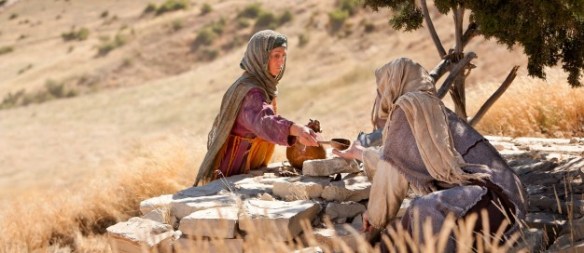
This morning I turned in my bible reading to John chapter 4, to Jesus’ interaction with a woman who does not show a need for God in her life either, and I see Him showing this woman her own need for a savior. Jesus speaks to her of living water. She hears this as an offer to not go to the well any longer. So Jesus speaks of the relationships that have been broken, whether because she is a widow, or divorcee, or other brokenness. He shows her her need. My friend and several of my other friends and neighbors, however, seem to not have this need on the surface of their lives. In fact, many of the people around me do not seem to feel such needs at all.

Jesus’ interaction with the woman in John 4 begins with physical needs, namely water. My neighbors seem to have their physical needs taken care of. I have grown in my understanding of the Christian responsibility to take care of physical needs, and highly regard efforts to care for those who have these needs. It’s hard to listen to lessons about God when your stomach is growling and your limbs are shaking with cold.

5-jesus-and-samaritan-woman-well4-626x272

In addition, my neighbors and my friend last night seem to similarly have many of their relational needs taken care of. I know many of their deeper needs may be hidden, because such needs are not appropriate to openly show to the neighborhood. Nevertheless, many of their marriages seem to be going well. Not many of them seem to have kids that are rebelling, as many of them are still young. They are still experiencing the “American Dream” and do not seem to have the need for Christ to come in and heal anything there. It seems as though they do not have a gap for Jesus to fill in this area of life. I know, again, that were I able to gain access to deeper and deeper areas of their souls there may be areas of discontent, but it’s often difficult to speak to those when I’m standing around watching our kids play on the street.

It is interesting that in Jesus’ interaction with the woman, it is she that moves the conversation from the personal to the theological, the third level of need. This need comes at the level of universal need; it is often neither felt nor thought of, but is a need of deepest importance. It is a need of eternal consequence.

The way Jesus and the woman approach this need to relate to God is through the lens of worship.  Indeed, this is the first and greatest command—to love God with all our heart, mind, soul and strength. Jesus says that we must love God in spirit and in truth (vv 24). This means we must worship God with a true sense of who He is, with correct thoughts about Him, and with correct affections for Him. We must have a correct relationship with truths, which exist externally to us, as well as a correct relationship to affections that exist within us. If either of these are incorrect, then our state of relationship with God is in a incorrect state, and we are not relating to God in the right way.

This, I believe, is what my friend needs to hear. He does not feel the need for God in his life in in regards to his physical and relational needs—those are met right now. His wife is praying that he comes to feel the need for Jesus, like she did, but I’m not sure it has to be that way. His journey may be through a different path. It may be that he realizes through thinking, through his intellect, that he has not met the appropriate conditions to be right with God, and is therefore separated from Him. Either way, my friend needs to hear that the truth is that unless he is correct in his BELIEFS and AFFECTIONS then he is not in a right relationship with the God who made him and loves him.

The trouble is, we do not have absolute control over either our beliefs or our affections. We must place ourselves in situations where our beliefs and affections for God can grow. We read the Scriptures, we participate in the activities of faith (spiritual disciplines and practices), we participate in the lives of other saints; but we do not have direct access to our own souls to flip switches in our beliefs and affections—we have only indirect means. We must consistently use those indirect means to do the best we can. We say with John the Baptizer, “A person cannot receive even one thing unless it is given from heaven.” We must humble ourselves and say, I can’t make this happen, I need to be born from above (John 3), I can’t make this new life happen myself. I need to be born by the will of God, yet my acceptance of Christ plays some part in it as well (John 1:12-14). We all need to have the attitude, “God, save me.”

To my friend, or to someone else who may read this who is not a believer, who knows that he does not believe the right things, or who does not have the right affections for God and wants them, I say: pray. Ask God for those things. He is a giver. He is good.

“Ask, and it will be given to you; seek, and you will find; knock, and it will be opened to you. For everyone who asks receives, and the one who seeks finds, and to the one who knocks it will be opened. Or which one of you, if his son asks him for bread, will give him a stone? Or if he asks for a fish, will give him a serpent? If you then, who are evil, know how to give good gifts to your children, how much more will your Father who is in heaven give good things to those who ask him!” – Matthew 7:7-11

Ask God to give you the right heart and the right mind towards Him. Ask Him to draw you near to Him and help you worship Him in Spirit and in truth, for the Father is seeking worshipers such as these. He will help you become as such if that is your desire. Read the Bible—it is His testimony towards us to help us know Him.

If you already do believe, but like me, you find that your affections waver, then again, pray. Ask God to make the reality that He has saved you more real again. Pray like David: ”Restore to me the joy of your salvation, and uphold me with a willing spirit.” – Psalm 51:12. Indeed, the whole Psalm is appropriate here, for if the command of God is to worship in Spirit and truth, to love God with ALL our heart, mind, soul and strength, then to do anything less is actually sin, falling short of perfection. So confession for our shortcoming is our first order of business. This is not confession in which God is looking down upon us as a disappointed judge, but where He looks on us with the eyes of a loving Father.

The LORD is merciful and gracious, slow to anger and abounding in steadfast love. He will not always chide, nor will he keep his anger forever. He does not deal with us according to our sins, nor repay us according to our iniquities. 

For as high as the heavens are above the earth, so great is his steadfast love toward those who fear him; as far as the east is from the west, so far does he remove our transgressions from us. As a father shows compassion to his children, so the LORD shows compassion to those who fear him. For he knows our frame; he remembers that we are dust.  – Psalm 103:8-14

I pray that as these truths enter more and more deeply into my heart, and into others hearts if anyone reads this blog, that we will be able to be like Jesus, saying about ministering to others,

“But he said to them, “I have food to eat that you do not know about.” So the disciples said to one another, “Has anyone brought him something to eat?” Jesus said to them, “My food is to do the will of him who sent me and to accomplish his work. Do you not say, ‘There are yet four months, then comes the harvest’? Look, I tell you, lift up your eyes, and see that the fields are white for harvest.  Already the one who reaps is receiving wages and gathering fruit for eternal life, so that sower and reaper may rejoice together. – John 4:32-36

Ripe-wheat2.jpg

Has another year flown by?

“Oh gracious how the child has grown”

“It seems only yesterday we brought her here, just a tiny baby…”

This funny little exchange between two of the good fairies in Disney’s Sleeping Beauty rings true for most of us parents, even if we don’t relate to much else about the fairies’ childrearing experience, such as the fact that in 16 years they never learned to bake a cake. But never mind that.  Jeremiah and I certainly do feel like our kids are growing fast. I can’t believe that our birth kids are 9, 7 and 5 years old! Engaging with them is so fun at these ages, and they have so many amazing thoughts and ideas. Yet I also feel nostalgia for the stages we have left behind.

Anyway, I thought I would give a little family update, since it is the end of the year when the newsy Christmas cards come out. Speaking of Christmas cards, this year I am actually going to hang them up on ribbons with clothespins (the only pinterest-ish thing I will be doing, by the way) in our hallway, so if you send us a picture, we will put it up.

Those who know us know that we have been involved in Foster care for a couple years now. It has been a little weird this fall not having any foster kids in our home. The reason for that is that, while we LOVE being a foster family (having those precious kids as part of our family for however long they need us and getting to know their families), we are now pursuing a more permanent foster placement by working with an agency that matches waiting kids with forever families. We have been going through that additional licensing process this Fall.  Because we have been deeply affected by our fostering experiences in positive ways, we plan to stay engaged with the foster care system long term—this is just another step in our continuing journey.

And now, to describe our 3 imaginative and joy-filled adventurers …

Isaiah (9) is my inquisitive book worm.  He continues to read way more than I can possibly keep up with. He consumes books—there is no other way of explaining it. He loves learning about new things and has questions to prove it. He doesn’t want to miss out on any conversation, especially with adults. It has been fun homeschooling him for 4th grade so far, watching him enjoy the process of learning at his own pace (and having more time to read), while re-learning some fun things I forgot long ago.  He is also making progress learning piano, enjoyed playing soccer this fall, loves running club, and ranks Legos and fuse-beads as his favorite creative outlets.

Bethany (7) is my empathetic artist.  She also loves to learn and enjoys going to our neighborhood school both socially and academically. I love hearing about all that she is learning, including the many biographies her teacher is reading the class. I also love that she always has a list of friends she wants playdates with. She continues to enjoy ballet, all things artistic, reading, and creating imaginary worlds with her brothers. She misses her foster siblings and is looking forward to meeting a future little sister (often praying for her, wherever she is).

Judah (5) is my social sportsman. He started kindergarten this year and seems to be friends with everyone in his class. He says his favorite time at school is recess, but I can tell he is also enjoying the learning and creative projects too. He loves to be outside playing with the neighborhood kids, and excelled at soccer this fall.  I’m so glad, however, that he still likes to cuddle and read books together, which we often do when he isn’t busy playing with a ball, imagining he is a knight/pirate/monkey/etc.,  or asking if it is the weekend so he can play Wii.

Jeremiah and I continue to enjoy life with these three blessings, as we try to direct their hearts to where we believe the true source of life is—Jesus Christ. We can’t imagine our lives without our kids. We also continue to enjoy ministry with students here; somehow we meet awesome young people everywhere we go, and UC Davis is no exception.  In addition, Lori enjoys juggling her new role as home school teacher and her continuing work as a Cru staff attorney.  Jeremiah manages to squeeze in lots of studying for his seminary classes amid his many Cru responsibilities. And we are both enjoying getting to know our neighbors better and making more friends at church while finding little ways to serve there.

Well, there you have it—a little family update.  God is indeed good to us.  As is no doubt also true for many of our friends, 2015 went by both slowly and quickly at the same time—slowly enough to enjoy each unique moment and experience; fast enough to cause us to look back and wonder how we are in December again.

Policies and Pluralism

I have been taking note of various policies on college campuses around the country. One trend I am noting, both at private and public colleges (but often particularly at private schools), includes the emergence of policies that reflect the desire to shelter students from situations or conversations that make them uncomfortable. There is an attitude out there that if someone is offended, it was a bad thing. This attitude tends to put the pressure on the person doing the talking, not the person “feeling” offended—all the responsibility is on the speaker to not say anything controversial, as opposed to the responsibility being on the listener to assume the best, seek to understand, and give grace to their fellow flawed person who, first of all, may have very different perspectives on life and who, second, is unlikely to be able to read the mind of the listener to know if what they are saying is being received well.

I want to be clear that I am in favor of the goals of teaching and modeling tolerance and respect, and I am not trying to defend the people who viciously state things for the purpose of harming or demeaning others. I want people to learn to seek understanding, to be capable of listening to viewpoints very different from their own without demeaning them, to learn to think critically and articulate their own viewpoints sensitively and with care.  Nevertheless, on many university campuses the policies are failing to accomplish this goal; in contrast, the policies end up turning civic responsibility upside down. Instead of learning that they should listen to different viewpoints and be capable of gracefully disagreeing while still being civil, students are being taught that they have the “right” to expect not to be offended. They don’t feel the need to respectfully articulate their discomfort or disagreement, but instead just complain to an institution that they expect will then clamp down on the offensive speech and silence the individual or group it is coming from. This common perspective of students and administrators should scare us…

We need to consider that there may be an underlying backdrop of censorship here. Realistically, if we are stifling viewpoints deemed “unacceptable” by university administrators or even by the majority of students, it is censorship.  We should have learned from history by now that stifling minority viewpoints because they are unpopular or disfavored is problematic—it runs counter to the principles of Free Speech that the United States has championed for so long, and moves us closer to the totalitarian regimes that have done so much damage to their citizens throughout history and today.

The question for me becomes, “Are there times when censorship is appropriate?  Lets back up.  Most people agree that children need to be protected, and that it is the role of parents, but also of society and government (to a certain extent), to provide this protection. I therefore think parents should limit what their children take in. In addition, elementary schools should limit what children can look at online and should carefully choose the influences they expose children too. A discussion bigger than this post is how schools should work with parents to still allow parents to be involved in some of those decisions (such as choosing to opt out of certain teaching materials for their children). I will just say, for now, that it is complicated.

Nevertheless, I think it should be clear that the university level is different. We are not dealing with children anymore—these are young people learning how to live on their own; how to make their own choices; how to participate in civic society; and what is appropriate in relating to other people and the government.  So the mandate to “protect” from all influences deemed “less acceptable” by the majority should fade away, and college students should be taught to think for themselves and to engage respectfully with ideas from all ends of the ideological spectrum. True respect and dialogue is grounded in listening and trying to understand, and has no room for entitlement.

We fail young people if, instead of teaching them to respectfully engage, we teach them that they have a right not to hear perspectives outside the academic mainstream.  If they believe that those in power should be able to stifle those not in power (without connecting this to the many tragedies of history that it produced), then it will lead to society’s decline and will doom us to the repetition of oppression, discrimination, and marginalization that have occurred over and over again in history. Unfortunately, it seems that is where much of University culture is headed… I recently read an interesting statement in an article in “The Chronicle of Higher Education.”  Laurie Essig, a liberal feminist scholar, says “We can never know the world by shutting it out. You can force disagreement to move out of the open, into the little nooks and crevices left after power has cleansed all offensive speech. But you can never make the disagreement disappear.” In the article, she is pointing out that US universities are stifling controversial and/or marginalized perspectives, leaving them little space to be articulated. I find it interesting that she is feeling that as a person on the far left. Many religious people with strong religious viewpoints that some might label “intolerant” are experiencing a similar reality. Yet there is a blindness among administrators that they are creating this artificial space where only the “acceptable” and “non-offensive” majoritarian viewpoints are able to flourish.

Instead, I believe young people should be taught to live in a pluralistic society.  Let me be careful to describe what I mean by Pluralism.  I grew up thinking pluralism is bad—I thought it was basically saying there is no such thing and truth. Therefore, I concluded, Christianity required me to be anti-pluralism, since we believe that there is one truth.  But true pluralism is not the cliché of the “coexist” bumper sticker. We should instead think of it as a respect for and promotion of healthy diversity and discussion, but without having to erase our differences. It is this type of discussion that promotes understanding and compassion, and helps people to authentically engage with those different than themselves.

As my friend John Inazu persuasively describes, “A confident pluralism seeks to maximize the spaces where dialogue and persuasion can coexist alongside deep and intractable differences about beliefs, commitments, and ways of life. It suggests that we ought to resist coercive efforts aimed at getting people to “fall in line” with the majority. There are, of course, limits to this resistance. Some limits, like enforcing majority norms against human sacrifice, are obvious. Others, like criminalizing marijuana use, are more contested. But a confident pluralism presumes a broad capacity to differ meaningfully from state and majoritarian norms.” , John Inazu, A Confident Pluralism, 88 So. Ca. L.Rev. 587, 592 (2015).

I am in favor of moving towards this type of dialogue. I want to listen and try to understand people from the opposite side of the ideological spectrum as myself.  I also think I will find that, while our perspectives remain far apart, we will find that society will benefit from seeing us engage respectfully, instead of society trying to police and silence opinions that someone might take offense at.

Thinking society should protect you from offensive ideas instead of learning to take responsibility to respond and address different ideas by engaging respectfully is dangerous (although this does not mean we can’t point out the dangerous direction an individual’s logic is leading, such as with racist propaganda). In contrast, practicing listening, dialogue and critical thinking will lead to healthy and lasting friendships and community—perhaps those are principles that we should be more focused on teaching at the university level.

I am not saying this is simple. I bristle when I see offensive language, racism, violence and sexuality all over—and part of me just wants it silenced. And I definitely censor it for my children because that is my job as their parent—I am to protect them and give them wisdom so that they can make good choices later and engage appropriately with the world. BUT the feeling that I want to stop it from existing through an exercise of power and censorship is not the best answer. I do want to stop it—but I don’t want to do it through domination and authority. I want to do it by engaging lovingly and showing that there is a better way.  It is through seeking to understand, through dialogue, through compassion that we will achieve change. This is a different kind of power—it is the power that Jesus displayed in how he came to this world through his incarnation.